
Is Discover cars legit? An in-depth evaluation of the rental platform

Is Discover cars legit? An in-depth evaluation of the rental platform

Key Takeaways

Navigating the rental market requires a clear understanding of the tools available to you, and assessing whether a platform is reliable is a primary step. Discover Cars serves as a significant player in the comparison space — you can compare live prices on DiscoverCars before booking, offering transparency features that help travelers make informed decisions while avoiding common booking pitfalls.

  • Discover Cars acts as a meta-search engine rather than a direct rental supplier.
  • User reviews and industry recognition underscore the platform’s reliability as a legitimate travel partner.
  • Comparing all-in prices allows travelers to avoid the surprise of hidden rental counter fees.
  • Managing your own insurance and toll options is a recommended strategy to maintain budget control.
  • Proper document preparation and vehicle inspection are essential for ensuring a smooth journey.
DiscoverCars.com

This guide evaluates whether DiscoverCars is legit and safe to use. For the specific rental fees to watch out for, see our companion guide: DiscoverCars Florida Review: 9 Rental Fees to Avoid.

Understanding the business model of Discover cars

Many travelers are concerned about the mechanics behind online travel agencies and how they function compared to individual rental counters. By acting as an intermediary, these platforms simplify the search process by aggregating thousands of global and local offers onto a single screen. This Discover Cars model prioritizes visibility for the consumer, allowing for direct comparison of vehicle classes, policies, and rental conditions.

How a car rental comparison site operates

These sites crawl inventory databases from large international brands and smaller local agencies simultaneously. Once a user enters their travel dates and destination, the platform displays potential matches that meet specific criteria. This process serves to filter out non-availability early on, so travelers don’t waste time researching vehicles that aren’t options for their trip.

Relationship with local and global rental agencies

Rental platforms cultivate partnerships with a wide range of providers to ensure the inventory stays fresh and competitive. They do not maintain their own fleets but rather coordinate with providers to display real-time pricing and terms. This network allows for a vast selection of reliable vehicles throughout many countries, helping travelers find availability even in high-demand periods.

Revenue sources and why pricing differs from direct booking

Platforms generate income primarily through commissions earned when a booking is finalized through their interface. Because they handle high volumes of traffic, they can often secure preferential rates that aren’t available to the general public.

  1. Aggregator volume discounts for specific high-turnover markets.
  2. Commission structures from rental agencies for facilitating conversions.
  3. Value-added services and insurance products offered during the checkout process.
  4. Fees for promotional placement and featured listings from partner brands.

This system often allows the site to offer competitive rates, keeping costs lower than a standard rack rate at the airport.

Assessing the legitimacy and safety of the platform

Determining if a site is authentic is essential, especially when providing payment details online. Travelers should focus on third-party verification and standard industry security protocols that protect sensitive information. Establishing trust is a multifaceted effort involving public feedback and technical safeguards.

Trustpilot ratings and aggregated user feedback

High rankings on independent review platforms are a strong indicator of a service’s viability. Most users share their experiences regarding how easy it was to find the car, the accuracy of the pricing, and the quality of support should a problem arise. Consistent positive interactions across multiple regions for this aggregator demonstrate that travelers generally feel secure using it for their vacation plans.

Encryption, data protection, and secure payment processing

Safety starts with how the platform handles financial data during the booking stage. Reputable travel platforms employ standard encryption protocols, ensuring that your credit or debit card details are passed securely to the payment gateway. By verifying that your browser address bar reflects a secure connection, you can book with a reasonable expectation of data safety.

Verification standards for partner rental companies

Not every local rental shop makes it onto these comparison sites. There is often a vetting process that forces suppliers to adhere to specific operational standards, including fleet maintenance protocols and transparent check-in procedures. This filtering keeps the ecosystem cleaner for the end-user by excluding companies with poor track records regarding customer safety or vehicle condition.

Navigating hidden costs and pricing transparency

Understanding what is included in your reservation is vital for avoiding the shock of extra charges upon arrival. Hidden fees often result from misunderstandings regarding insurance coverage or mandatory local surcharges that are sometimes excluded from initial web quotes. Transparency comes down to reviewing the specific terms of your agreement carefully.

Why the final price may differ at the rental counter

Sometimes, the price you pay at the booking site does not account for local taxes or mandatory facility surcharges that vary by municipality. Reading the rental conditions linked in your confirmation email helps clarify exactly what is pre-paid and what the rental provider will collect at the desk. Many experts suggest using tools like the SunDrive resources to understand these common charges.

Understanding third-party insurance options and coverage limits

Insurance is the single largest factor in price variance. Rental desks frequently try to sell their own premium coverage, but you might already carry sufficient protection through your personal auto policy or credit card. Confirming your existing coverage before you depart allows you to decline unnecessary up-sells at the counter with confidence.

Mandatory local charges and surcharges not listed online

Some destinations impose specific road taxes, young driver surcharges, or airport drop-off fees that are governed by local law rather than the broker. Because these can change based on the exact vehicle chosen, verifying the "included" list on your quote prevents surprises.

Evaluating the quality of customer support

Access to responsive help is the deciding factor in whether a platform provides actual value when things go sideways. From changing your travel plans to ironing out misunderstandings at the pickup locations, the availability of clear communication channels proves crucial. Users often look for 24/7 access and multiple ways to reach a human agent.

Response times and communication channels available

Being able to reach support via email, phone, or live chat allows users to handle issues in real-time. A good support system should acknowledge inquiries quickly, especially for travelers currently stuck in an airport terminal. Quick response times indicate that the platform values your experience enough to invest in infrastructure that handles high call volumes without long wait times.

Support efficacy for booking modifications and cancellations

Plans change often, and the ability to update your booking without excessive penalties is highly valued. A robust platform provides a management portal where users can cancel or modify dates, usually with clear disclosures about any potential fees. Transparency here is key to a positive customer experience, ensuring that changes don’t result in unexpected financial loss.

Handling disputes between renters and local agencies

Occasionally, a local agency might not adhere to the policies displayed on the booking platform. In these instances, the aggregator acts as an advocate, helping mediate the disagreement and forcing the agency to justify any disputed charges. This structural support is a major benefit over booking independently, as the platform has more leverage with the agencies to uphold the service agreement.

Pro and con analysis for travelers

Aggregators have reshaped how we plan road trips, but like any tool, they have specific ideal use cases. While the efficiency of comparison is undeniable, the layers between you and the car owner introduce complexities that direct booking does not. Assessing your own risk tolerance and familiarity with rental terms dictates which method is better for your particular trip.

Benefits of using a comparison aggregator for car rentals

Using an aggregator is generally faster and highly reliable for price hunting across vast regions. You get a broad view of the market, allowing you to filter by specific needs like fuel policies, 4×4 availability, and overall ratings from previous travelers. This ease of use turns a tedious logistics task into a quick 15-minute search.

Common pain points and limitations reported by users

The primary downside involves the potential for miscommunication regarding vehicle availability or the exact terms of counter-purchased add-ons. Because the booking platform and the vehicle owner are distinct entities, information sync issues can pop up, although these are relatively rare when choosing highly-rated agencies.

When it makes more sense to book directly with a rental brand

Sometimes a direct relationship is preferable, especially if you have high loyalty status with a specific brand or need absolute consistency in service. The following table summarizes when to choose one strategy over the other:

Scenario Aggregator Advantage Direct Booking Advantage
Planning a new, unknown route Better pricing options None
Loyalty club members Not applicable Priority service/cars
Budget-focused travel High cost savings Minimal savings

By matching the booking strategy to your specific travel needs, you secure the best possibility of a hassle-free trip.

Tips for a smooth rental experience through Discover cars

Preparation remains the best way to handle the rental desk. By taking certain steps before you arrive, you ensure that you aren’t forced into last-minute decisions that inflate your costs. Planning allows you to manage the rental like a professional travel consumer.

Vital document preparation for international rentals

Ensure you have a valid driver’s license, an international driving permit if required by the destination, and a primary credit card with sufficient capacity to hold a security deposit. Rental agencies are strictly regulated and will refuse the car if these items are not in order, regardless of your booking confirmation status. Checking these requirements weeks before departure is vital.

Checking vehicle condition and fuel policies before departure

Before you exit the parking area, perform a brisk walk-around and photograph the vehicle from every angle. If you spot a scratch or dent, report it immediately to the staff and ensure it is documented on your rental agreement. Similarly, verify the fuel policy—most companies expect you to bring the tank back at the same level—to avoid aggressive refueling surcharges.

Important steps to take at the rental counter to avoid disputes

Review the final contract presented at the desk to ensure it matches the quote you agreed to online. Do not sign anything you do not understand, and ask for written explanations if the agent adds fees you didn’t expect. If the agent demands mandatory insurance that you know you don’t need, respectfully show them your own insurance paperwork. Being polite but firm with your documentation is usually enough to resolve the vast majority of desk-side issues.

See DiscoverCars deals with the all-in price shown upfront

Check live DiscoverCars prices →

Conclusion

Using a comparison platform provides a clear, transparent way to survey the rental market without endless manual searching. By following practical advice—like having your insurance documentation ready and taking photos of your vehicle at pickup—you neutralize the most common pain points associated with any booking method. Whether you choose to aggregate prices or book directly, understanding your rights as a consumer remains the most effective tool in your travel kit.

Frequently Asked Questions

Do I need a credit card for rental car deposits?

Most rental companies require a credit card in the driver’s name to hold a security deposit, as this is used to cover potential damages. While some locations accept debit cards, the process is often more complicated and may require deeper identification checks or additional down payments.

What happens if my flight is delayed and I miss my pickup?

If you have provided your flight number during booking, the rental company can better track your arrival and hold your car for a reasonable period. It is always wise to call the local agency as soon as you know you will be late to ensure they do not classify your booking as a no-show.

Is it always cheaper to book through a third-party site?

While comparison sites frequently offer competitive rates through bulk volume discounts, it is not guaranteed for every single booking. Sometimes, rental brands offer direct booking discounts or loyalty points that can be more beneficial for frequent travelers.

Can I add another driver to my rental once I arrive?

Yes, most agencies allow you to add a driver at the counter, but you must be prepared to pay an additional daily fee. Both drivers will typically need to present a valid license at the desk when the adding process occurs.

What do I do if the agency tries to force me to buy extra insurance?

If you have already confirmed that your personal auto insurance or travel insurance covers rental vehicle damage, politely decline the agency’s offer. Ensure you have proof of your coverage easily accessible and stay firm that you are opting out of their supplemental protection.

Why does the rental car company require a deposit?

Deposits act as a safeguard for the agency to cover potential incidents like fuel shortages, unpaid tolls, or damage occurred during the rental period. This hold is typically released after the car is returned, inspected, and found to be in the same condition as when it departed.

Are there specific fees I should look out for before booking?

When reviewing a quote, check carefully for one-way drop fees, young driver surcharges for those under 25, and convenience fees for toll equipment. Being aware of these line items allows you to compare the true all-in cost rather than just the base daily rate.

Disclosure: This is an independent guide. It contains affiliate links to DiscoverCars; if you book through them we may earn a small commission at no extra cost to you.

Rental Car Insurance Explained: Types, Coverage & What You Need

Understanding rental car insurance: A complete guide for travelers

Key Takeaways

Navigating rental car insurance is a fundamental step for any traveler to avoid financial risk and unnecessary expenses. This summary breaks down the essentials for securing the right coverage for your next rental.

  • Evaluate existing policies and credit card benefits before purchasing rental agency insurance.
  • Understand that rental agency plans often provide convenience rather than essential coverage.
  • Distinguish between primary and secondary insurance coverage to avoid double payment.
  • Document every detail of your vehicle condition and any incidents according to rental terms.
  • Research liability minimums and protection options based on your specific destination.
DiscoverCars.com

This guide focuses on the types of rental car insurance and third-party providers. For whether your own policy or credit card already covers you, see our companion guide: Does Your Insurance Cover Rental Cars?

Understanding the basics of rental car insurance

When you approach a rental counter, the representative will often offer protection packages that seem mandatory but are frequently optional. Standard rental agreements typically establish a basic contract that covers the vehicle itself but offers limited protection for the driver’s financial liability against third parties. Understanding this core contract is the first step in protecting your finances. At SunDrive, we recommend digging into the specifics of your agreement to avoid paying for coverage you might already possess, especially since rental car insurance decisions can have major budget implications.

What usually comes with a standard rental agreement

The rental contract itself generally holds the user responsible for returning the car in the same condition as it was received. While it might include basic legal minimums required by the state or country, this protection rarely covers everything.

The difference between rental coverage and your personal auto policy

Your personal auto policy is designed to cover the vehicle you own, but it often extends limited protection to rentals. Unlike a rental policy which may have simple terms, your insurer might require you to navigate complex claims procedures while covering your out-of-pocket deductible.

Why rental agencies push their own protection plans

Agencies often prioritize selling protection plans because these add-ons generate significant revenue. While these products provide a hassle-free claims process if something happens, you should weigh their cost against your current risk profile.

Assessing your current coverage gaps

Determining whether you need extra coverage requires a thorough review of your existing financial safety nets. Before you sign anything, check if your home, health, or auto insurance fills the gaps that the basic rental contract leaves open. If you are uncertain about potential pitfalls, SunDrive offers advice on identifying these hidden risks to ensure you stay protected throughout your journey.

Checking your personal car insurance policy limits

Review your policy docs or contact your agent to confirm if your coverage applies to rental cars and under what conditions. Some policies only cover domestic rentals, while others remain quite restrictive regarding luxury or commercial vehicle types.

Benefits provided by your credit card issuer

Many credit cards include built-in protection as a perk for booking your trip. If you hold a premium card, such as those that might link to Capital One rental insurance benefits, you might be eligible for primary coverage that settles damages before your own auto company ever gets involved.

When your existing coverage might be insufficient

Sometimes your current insurance limits are simply too low for the cost of modern vehicles.

Coverage Type Typical Limit Why It Matters
Liability Standard Mini Low limits create personal exposure
Physical Damage Actual Cash Value Protects against total car loss
Supplemental Varies Covers gaps in personal policy

It is vital to match your coverage type with the specific risk profile of your destination. If your personal liability limit does not cover local requirements, you remain financially vulnerable.

Types of rental car insurance coverage explained

Deciphering the alphabet soup of insurance acronyms can be overwhelming. Each product serves a distinct purpose, ranging from protecting against body dents to covering medical bills for passengers.

Collision damage waiver benefits

Usually shortened to CDW, this waiver relieves you of financial responsibility for damage to the rental car. It is not technically insurance but a contractual agreement limiting your liability.

Liability coverage for personal injuries and property damage

This is designed to pay for damage or injuries you cause to others. Most states require at least some level of primary liability, but it is often insufficient if you are found at fault for a major accident.

Personal effects coverage for your belongings

This rider covers items inside your car, such as luggage or electronics, if they are stolen during the rental period. It functions much like your renters or homeowners insurance.

Supplemental liability insurance options

Often called SLI, this provides extra liability protection over the state-mandated minimums. If you are traveling to a region with high legal risk, this additional buffer is a critical component of a comprehensive safety strategy.

Evaluating third-party rental insurance providers

Independent insurance companies often offer plans that mirror agency products at a fraction of the cost. These policies can be purchased online before your trip, providing independence from the limitations found in rental agency agreements. For travelers who value transparency, State Farm suggests analyzing these external providers to find better value.

Comparing costs between agency plans and independent insurers

Independent insurers generally operate on a flat daily fee regardless of the vehicle type. Agency plans might scale their pricing based on vehicle classification, which can drastically increase your bill.

Pros and cons of stand-alone rental insurance policies

Stand-alone policies provide unique benefits for frequent travelers who handle their own bookings. Consider these points:

  • Flexibility to choose custom coverage limits tailored to your specific needs.
  • Lower daily premiums compared to traditional rental counter pricing structures.
  • Potential for coverage during travel in various international countries.
  • No requirement to file through your personal auto insurance provider.

Once you weigh these aspects, you can decide if the savings justify the extra step of purchasing a unique policy independently.

How to verify the legitimacy of third-party policies

Always ensure the insurer is licensed to operate in your destination country. Check their ratings through public databases to confirm they are a reputable firm before committing to an annual or trip-based plan.

Making the right decision for your trip

Your final choice should depend on where you are traveling and how you plan to use the vehicle. A road trip through a remote mountainous region carries different risks than an urban city rental, necessitating a tailored approach to your insurance strategy.

Factors to consider based on the rental location

Regulations regarding mandatory insurance vary immensely globally. In some countries, comprehensive insurance is bundled into the rental price, while in others, you are expected to provide your own documentation.

Assessing the level of risk for your specific journey

If your itinerary involves heavy traffic or navigating unfamiliar terrain at night, the risk of minor fender-benders increases. Higher usage intensity often argues for broader collision and liability coverage.

Cost-benefit analysis of buying protection versus taking the risk

Calculating the maximum potential out-of-pocket expense helps clarify if buying a daily waiver is worth the premium. If the cost of the waiver is a small fraction of your total trip cost, buying peace of mind is often the smarter route.

Steps to take if you are involved in an accident

Even with the best preparations, accidents can happen unexpectedly while you are on the road. Knowing the protocol ahead of time prevents panic and ensures your claims are processed efficiently by the relevant insurance parties.

Documenting the scene and vehicle damage

Take clear photographs of all damages from multiple angles as soon as it is safe to do so. Collect contact details from any other drivers involved and note the location and time of the incident to provide a clear record.

Reporting requirements for the rental agency

Most rental contracts require you to notify them immediately or within a specific timeframe following an incident. Failure to report promptly can result in denied insurance coverage or even additional penalties.

Coordinating claims between your insurance provider and the rental company

Once you begin the claims process, keep all communication organized to avoid conflicting stories or missed deadlines. You may need to provide your police report and the original contract details to link the claim across your different protection providers.

Compare rentals with the all-in price shown upfront

Check live rental prices on DiscoverCars →

Conclusion

Securing proper rental protection is all about balance, ensuring you avoid overpaying for unnecessary coverage while shielding yourself from significant financial liability. By verifying your existing personal policies and assessing the risks unique to your trip, you can confidently navigate the rental counter with a clear plan, allowing you to focus on the road ahead rather than the potential costs of an incident.

Frequently Asked Questions

Should I buy rental car insurance if I already have my own auto insurance policy?

It depends on the scope of your existing coverage, as many policies offer basic protection that might not cover rental vehicles or international trips. You should review your policy documents or contact your agent to determine if you need additional coverage for liability or damage to the rental car.

Does my credit card cover rental car insurance?

Many credit cards provide rental car protection, especially premium travel cards, which can include theft and collision damage coverage. You must verify if your card offers primary or secondary coverage and ensure you adhere to their specific terms, such as declining the rental agency’s waiver.

What is the difference between primary and secondary insurance?

Primary insurance covers the loss first, regardless of other policies you might own, while secondary insurance only activates after your other existing personal insurance policies have been exhausted. Knowing this distinction is crucial to avoid paying both a personal deductible and a rental agency fee.

Can I rent a car without buying any insurance?

Technically, you can choose to decline most optional insurance products offered by a rental agency if state laws allow it, but you still remain liable for any damage caused to the car or other property. If you choose to go this route, ensure your own personal insurance policy and financial situation can handle the risk of a total loss.

What happens if I return the car with damages and have no insurance?

If you have no insurance coverage, the rental agency will bill you for the cost of repairs, potential loss of use while the vehicle is out of service, and administrative fees. These costs can be substantial and can quickly exceed the price you would have paid for a comprehensive insurance policy.

Do I need extra protection for international rentals?

Yes, coverage often changes significantly when you cross borders, as your domestic auto policy might not extend to a foreign country. It is highly recommended to research the legal requirements of your destination and consider purchasing an international protection plan if your existing coverage is not applicable.

Is liability insurance really necessary for a rental car?

Liability insurance is essential because it covers the costs associated with injuries to others or damage to their property that you may cause while driving. Even if your personal auto policy includes some liability coverage, the minimums may be too low for the legal and financial exposure you might encounter on the road.

Disclosure: This is an independent guide. It contains affiliate links to DiscoverCars; if you book through them we may earn a small commission at no extra cost to you.

Rental Car Deposit & Mileage Limits: What to Know Before You Book

A clean rental car odometer and a smartphone showing a payment hold

Rental companies place a temporary hold (deposit) on your card — often $200 to $500 or the rental amount — and most US rentals include unlimited mileage, though one-way and specialty rentals sometimes cap it. Knowing the deposit and mileage rules before you book prevents surprises. Comparing suppliers on DiscoverCars shows the full terms upfront.

Key Takeaways

  • Companies hold a deposit on your card — often $200–$500, more on a debit card.
  • The deposit is a hold, not a charge; it’s released after you return the car.
  • Most US rentals include unlimited mileage.
  • One-way, exotic, or specialty rentals may cap mileage — check before booking.
  • Going over a mileage cap triggers a per-mile fee.
DiscoverCars.com

How Much Is a Rental Car Deposit?

Expect a temporary hold on your card at pickup, typically ranging from about $200 to $500, or the full rental amount plus a buffer — higher for premium vehicles or debit-card renters. This deposit covers potential damage, tolls, or fuel charges.

Importantly, it’s a hold, not a charge. The funds are frozen but not taken, and the hold is released after you return the car in good condition — though it can take a few days for your bank to free them up.

Does the Deposit Come Back?

Yes — assuming you return the car on time, undamaged, with the agreed fuel level and no unpaid tolls. The company releases the hold, and the money becomes available again. Any legitimate charges (a toll, a scratch, a late return) are deducted before the balance is released.

If the hold doesn’t clear within a week or so, contact both the rental company and your bank. Debit-card holds can take longer to release than credit-card holds, which is one reason a credit card is smoother for deposits.

Compare rental cars the easy way on DiscoverCars

Check live rental prices on DiscoverCars →

Do Rental Cars Have a Mileage Limit?

Most standard US rentals include unlimited mileage, so you can drive as much as you like within the rental period. This makes them ideal for road trips. However, some situations do cap mileage, and going over means a per-mile fee.

  • One-way rentals — sometimes limited, since the car ends up in another city.
  • Exotic or luxury vehicles — often capped at a daily mileage allowance.
  • Certain local or budget suppliers — may include a mileage limit to keep rates low.
  • Cross-border trips — may restrict where you can drive, not just how far.

Always check the mileage policy in the rental terms before booking, especially for a long road trip or a one-way rental.

How Do You Avoid Deposit and Mileage Surprises?

A little diligence upfront saves stress at the counter. The rental terms spell out the deposit and mileage rules, so read them before you commit:

  • Confirm the deposit amount and whether debit adds to it.
  • Check the fuel policy so you’re not charged for a refill.
  • Verify unlimited mileage — or note any cap and per-mile fee.
  • Photograph the car at pickup and return to protect your deposit.
  • Use a credit card for a smaller, faster-released hold.

Bottom line: expect a refundable hold of roughly $200–$500 (more on debit), and check whether your rental includes unlimited mileage — most do, but one-way and specialty rentals may not. Read the terms, photograph the car, and compare suppliers on DiscoverCars to see everything upfront.

Credit Card vs Debit Card for the Deposit

The card you use changes the deposit experience. A credit card places a hold against your credit line, so it doesn’t touch your actual cash, and the hold releases relatively quickly after return. A debit card freezes real money in your bank account, often with a larger hold, and can take longer to release.

For a smoother deposit and faster access to your funds, a credit card is the better choice. If you must use debit, leave extra cushion in your account and expect the hold to linger a few days after you return the car.

How Do You Protect Your Deposit at Return?

A few simple habits keep your full deposit safe. The most important is documentation: photograph or video the car’s condition at both pickup and return, including existing scratches, so you can dispute any unfair damage claim.

Also return the car on time, refuel to the agreed level, and clear any tolls. Get a return receipt or confirmation showing the car was accepted in good condition — that’s your proof if a charge appears on your card later.

Finally, remember the deposit and mileage terms are set per booking, not per company — the same brand can differ by location and vehicle class. Reading the specific rental agreement, rather than assuming, is the single best way to avoid an unexpected hold or a surprise per-mile charge on a long trip.

Frequently Asked Questions

How much is a rental car deposit?

Typically a hold of about $200 to $500, or the rental amount plus a buffer — higher for premium cars or debit-card renters. It’s a temporary hold, not a charge, and it’s released after you return the car in good condition.

Do you get your rental deposit back?

Yes, assuming you return the car on time, undamaged, with the agreed fuel level and no unpaid tolls. The company releases the hold and the funds become available again, though it can take a few days — longer for debit cards.

Do rental cars have unlimited mileage?

Most standard US rentals include unlimited mileage, ideal for road trips. But one-way rentals, exotic or luxury vehicles, and some budget suppliers may cap mileage, charging a per-mile fee for going over. Always check the terms before booking.

What happens if you go over the mileage limit?

If your rental has a mileage cap and you exceed it, you’re charged a per-mile fee stated in the rental terms. To avoid it, confirm whether your rental includes unlimited mileage before booking, especially for long or one-way trips.

Related Rental Guides

Disclosure: This is an independent guide. This article contains affiliate links to DiscoverCars; if you book through them we may earn a small commission at no extra cost to you. It never changes what you pay or what we recommend.

Rental Car Age Requirements: Renting a Car Under 25

A young adult in their early twenties standing confidently beside a rental car in a sunny parking lot

You can usually rent a car at 21 in most US states (18 in Michigan and New York), but drivers under 25 pay a ‘young driver fee’ of about $20–$37 per day and face vehicle limits. A few tricks — like AAA membership with Hertz — can waive that surcharge. Comparing suppliers on DiscoverCars helps you find the best rate; here’s what under-25 renters need to know.

Last updated: July 2026.

Key Takeaways

  • Minimum age is 21 in most states; 18 in Michigan and New York.
  • Under-25 drivers pay a young driver fee of about $20–$37 per day.
  • AAA members can sometimes waive the fee with Hertz.
  • Young renters are usually limited to economy through full-size cars.
  • Dollar and Hertz have the lowest company minimums (age 20 in most spots).
DiscoverCars.com

How Old Do You Have to Be to Rent a Car?

In most US states the minimum rental age is 21, though it varies. Michigan and New York allow rentals from 18, Alabama and Nebraska from 19, and Mississippi holds at 21. Company minimums differ too: Dollar and Hertz start as low as 20 in most locations, while Enterprise, Avis and Budget stick to 21.

So both your state and the rental company set the floor. Always check the specific pickup location, since the same brand can differ by state.

Rental Car Age Requirements by Company

Minimum age and the under-25 young driver fee vary by rental company. Here’s a quick comparison of the major US rental companies so you can see who lets you rent youngest and cheapest:

CompanyMinimum ageUnder-25 fee (approx.)
Hertz20 (most states)~$27/day (waived for AAA 20–24)
Dollar20 (most states)~$25/day
Thrifty20 (most states)~$25/day
Enterprise21~$25/day
Alamo21~$25/day
Avis21~$27/day
Budget21~$27/day
National21~$25/day
Approximate figures; the exact minimum age and fee depend on the pickup state and location.

Dollar, Hertz, and Thrifty generally have the lowest minimum age (20), while the young driver fee is fairly similar across companies. The cheapest option depends on your exact pickup location — which is why comparing suppliers on DiscoverCars usually finds the lowest total price.

Minimum Rental Age by State

Your state sets a legal floor that can be lower than a company’s policy. These are the notable state minimum rental ages — everywhere else the standard minimum is 21:

StateMinimum rental age
Michigan18
New York18
Alabama19
Nebraska19
All other states21 (standard)
State law sets the minimum; individual companies may still require 20–21 and charge a young driver fee.

Even in states that allow 18, expect the highest young driver fees for ages 18–20 — New York surcharges can reach around $84/day. So while you can rent younger in some states, it’s often the most expensive place to do it.

How Much Is the Young Driver Fee?

Even once you can rent, being under 25 costs extra. The young driver surcharge runs about $20 to $37 per day at most locations, added on top of the rental rate. Enterprise and Alamo average around $25/day; Budget around $27/day.

Fees are steeper in Michigan and New York for the youngest drivers. In New York, for example, 18–20-year-olds can face surcharges around $84/day, dropping to about $35/day for ages 21–24. Michigan is similar. Budget for this daily fee — it adds up fast on a longer rental.

Compare rental cars the easy way on DiscoverCars

Check live rental prices on DiscoverCars →

What Cars Can Under-25 Drivers Rent?

Being able to rent doesn’t mean you can rent anything. Young drivers are typically limited to economy, compact, intermediate, standard, and full-size cars, plus some standard SUVs and minivans. Luxury cars, exotics, and large vans are usually off-limits until 25.

If you need more space, confirm which classes your age qualifies for before booking, so you’re not turned away at the counter.

How Can You Avoid the Young Driver Fee?

A few routes can waive or reduce the surcharge, potentially saving a lot on a multi-day trip:

  • AAA + Hertz: Hertz waives the young driver fee for AAA members aged 20–24 who meet standard requirements.
  • Government / military: US government employees can rent at 18 with official orders.
  • Corporate rates: some company or insurance-replacement accounts are exempt — ask your account rep.
  • Compare suppliers: fees vary by company and location, so shopping around helps.

Note that a co-renter in the same age bracket also pays the fee if listed as an additional driver.

Bottom line: most under-25 drivers can rent from age 21 (younger in a few states), but expect a $20–$37/day young driver fee and vehicle limits. AAA membership or a corporate rate can waive the fee, so it pays to compare suppliers on DiscoverCars before booking.

What Do Under-25 Drivers Need to Rent?

The basics are the same as any renter, plus a bit more scrutiny. You’ll need a valid driver’s license, a second form of ID such as a passport, and a credit card in your own name in most cases. The young driver surcharge is paid at booking, pickup, or return.

Because young drivers are considered higher risk, some locations are stricter about the payment card and ID. Confirm the exact requirements for your pickup branch so you’re not caught out at the counter.

Does the Young Driver Fee Apply to Every Driver?

Yes, per driver in the age bracket. If you add a co-renter — a friend or spouse — who is also under 25, they pay their own young driver fee as an additional driver. Two under-25 drivers on one rental means two surcharges.

So if only one of you needs to drive, listing a single under-25 driver keeps costs down. And if an older companion (25+) can be the main driver, adding the younger person as a secondary driver may still trigger the fee — check the policy before booking.

One final tip: because young driver fees and minimum ages vary so much by company and state, comparing suppliers is where under-25 drivers save the most. The same trip can cost noticeably less with a company that has a lower surcharge or minimum age at your specific pickup location, so it always pays to shop around before booking.

Frequently Asked Questions

How old do you have to be to rent a car?

In most US states, 21 — but Michigan and New York allow 18, and Alabama and Nebraska allow 19. Company minimums vary too: Dollar and Hertz start as low as 20, while Enterprise, Avis and Budget require 21. Check your specific location.

How much is the under-25 rental fee?

The young driver surcharge is about $20 to $37 per day at most locations, on top of the rental rate. Enterprise and Alamo average around $25/day; Budget around $27/day. Fees are much higher in Michigan and New York for the youngest drivers.

Can you avoid the young driver fee?

Sometimes. Hertz waives it for AAA members aged 20–24, US government employees can rent at 18 with orders, and some corporate or insurance-replacement accounts are exempt. Comparing suppliers also helps, since fees vary by company and location.

What cars can under-25 drivers rent?

Usually economy through full-size cars, plus some standard SUVs and minivans. Luxury cars, exotics, and large vans are typically off-limits until 25. Confirm which vehicle classes your age qualifies for before booking.

How old do you have to be to rent a car with Hertz?

Hertz rents to drivers aged 20 in most US states, with a young driver fee of about $27/day for ages 20–24. That fee is waived for AAA members aged 20–24 who meet standard requirements. A few states set different minimums, so check your pickup location.

Can you rent a car at 18?

In most states no — the minimum is 21. But Michigan and New York allow renting at 18, and US government employees can rent at 18 nationwide with official orders. Expect the highest young driver fees at this age, sometimes around $84/day in New York.

Related Rental Guides

Disclosure: This is an independent guide. This article contains affiliate links to DiscoverCars; if you book through them we may earn a small commission at no extra cost to you. It never changes what you pay or what we recommend.

Can You Rent a Car With a Debit Card? (No Credit Card Guide)

A person handing a debit card at a car rental counter

Yes, you can rent a car with a debit card — all major US companies allow it — but the rules are stricter than with a credit card. Expect a possible credit check, proof of a return trip at airports, a larger deposit, and often a minimum age of 25. Comparing suppliers on DiscoverCars and confirming the branch’s policy avoids surprises at the counter.

Last updated: July 2026.

Key Takeaways

  • All major US rental companies accept debit cards, but with stricter conditions.
  • Many require proof of a return flight when you pick up at an airport.
  • Debit-card renters often need to be 25+ and pay a larger deposit.
  • Prepaid and gift cards are almost never accepted as ID at pickup.
  • Dollar is one of the most flexible — it allows some drivers under 25.
DiscoverCars.com

Which Companies Let You Rent With a Debit Card?

Most major brands accept debit cards, but each has its own conditions. Here’s how the big US companies compare:

  • Dollar — among the most flexible; allows some under-25 drivers and simple debit checkout when booked ahead.
  • Enterprise / Alamo — accept debit at airports only with a ticketed return itinerary.
  • Avis / Budget — generally require age 25 for debit; some locations don’t accept debit at pickup at all.
  • Hertz / National — require multiple IDs and proof of a return ticket, especially at airports.
  • SIXT — accepts debit with a return ticket booked 24h ahead; not for luxury vehicles.

The card must carry a Visa, Mastercard, or Discover logo — prepaid and virtual cards are excluded.

Debit Card Rental Policies by Company

Every major company accepts debit cards, but the conditions differ. Here’s a side-by-side look at how the big US rental brands handle debit-card rentals:

CompanyDebit at pickup?Key condition
DollarYesMost flexible; some under-25 allowed when booked ahead
ThriftyYesSimilar to Dollar; return ticket at airports
Enterprise / AlamoAirports onlyRequires a ticketed return itinerary
HertzYesMultiple IDs + proof of return ticket
NationalYesProof of return travel, especially at airports
Avis / BudgetLimitedOften age 25+; some locations decline debit at pickup
SIXTYesReturn ticket booked 24h ahead; not for luxury cars
PaylessYesReturn ticket + larger deposit at airports
Policies vary by location; always confirm your specific pickup branch before booking.

The card must carry a Visa, Mastercard, or Discover logo — prepaid and virtual cards are excluded everywhere. Comparing suppliers on DiscoverCars lets you filter for the conditions that fit your card.

What Extra Requirements Come With a Debit Card?

Renting on debit usually means jumping through a few extra hoops. Companies treat it as higher risk, so they add safeguards to protect against damage or non-return:

  • Credit check: many run a soft or hard check before approving a debit rental.
  • Proof of return travel: a ticketed itinerary in your name at airport locations.
  • Larger deposit: often an extra $200–$400 held on the card.
  • Higher age: some raise the minimum to 25 for debit users.
  • Address match: your license address may need to match your billing address.

Compare rental cars the easy way on DiscoverCars

Check live rental prices on DiscoverCars →

How Big Is the Deposit With a Debit Card?

Expect a bigger hold than with a credit card. Renting on debit often triggers an immediate hold on the full rental amount plus a security deposit — sometimes an extra $200 to $400 — which ties up funds in your account for the whole trip.

Because that hold reduces your available balance, make sure you have enough cushion to cover it plus your travel spending. Buying the rental company’s damage protection can sometimes reduce or waive the upfront deposit.

Tips for Renting Without a Credit Card

A little preparation makes a debit rental far smoother. These steps cut the friction at the counter:

  • Prepay online where possible — it can lower the deposit and speed pickup.
  • Bring proof of a return trip if picking up at an airport.
  • If a companion has a credit card, list them as the main driver.
  • Carry a second form of ID and confirm your address matches.
  • Call the exact branch ahead — policies vary widely by location.

Bottom line: renting on a debit card is doable at every major company, just with extra hoops — a possible credit check, return-trip proof, a bigger deposit, and often a 25+ age rule. Call your pickup branch to confirm, and compare suppliers on DiscoverCars for the best rate.

Is a Credit Card Still Better for Renting?

For most people, yes — a credit card makes renting smoother. It usually means a smaller, faster-released deposit hold, no credit check, no return-ticket requirement, and access to any vehicle class. Many travel credit cards also include rental collision coverage as a perk, which a debit card won’t.

That said, a debit card works fine if you plan ahead: book early, bring your return itinerary, and confirm the branch’s policy. If you have both, use the credit card for the rental to simplify the deposit and unlock card-based insurance.

Can You Rent Without Any Card at All?

It’s rare but possible. A few companies and car-sharing services like Turo accept cash at drop-off or mobile payments, but almost all require a physical card for the deposit hold at pickup. Prepaid and gift cards are excluded as ID at the counter.

If you truly have no card, your best options are listing a companion who does as the main driver, or using a peer-to-peer service with more flexible payment rules. Always confirm before you travel to avoid being turned away.

Frequently Asked Questions

Can you rent a car with a debit card?

Yes — all major US companies accept debit cards, but with stricter rules than credit. Expect a possible credit check, proof of a return trip at airports, a larger deposit, and sometimes a minimum age of 25. Confirm the branch’s policy first.

Which rental company is best for debit cards?

Dollar is among the most flexible, allowing some under-25 drivers and simple debit checkout when booked ahead. Enterprise, Alamo, Hertz and National accept debit but usually require a ticketed return itinerary at airports.

Do you need a return ticket to rent with a debit card?

Often yes, at airport locations. Many companies (Enterprise, Alamo, SIXT, Hertz, National) require proof of a ticketed return trip in your name when you use a debit card at an airport branch. Non-airport rules can be looser.

How much bigger is the deposit with a debit card?

Often an extra $200 to $400 on top of the usual hold, plus an immediate hold on the full rental amount. This ties up funds during your trip, so leave enough cushion. Damage protection can sometimes reduce the upfront deposit.

Does Dollar accept debit cards?

Yes. Dollar is one of the most debit-friendly rental companies, accepting a debit card at pickup and even allowing some drivers under 25 when booked ahead. You’ll still need a Visa, Mastercard, or Discover-branded debit card, valid ID, and usually proof of a return trip at airports.

How big is the deposit with a debit card?

Debit-card renters usually face a larger hold — often an extra $200–$400 on top of the estimated rental cost. The exact amount varies by company, car class, and location, and it’s refunded after you return the car in good condition.

Related Rental Guides

Disclosure: This is an independent guide. This article contains affiliate links to DiscoverCars; if you book through them we may earn a small commission at no extra cost to you. It never changes what you pay or what we recommend.

DiscoverCars Denver: Denver Car Rental Guide

A car on a scenic Colorado mountain highway near Denver with snow-capped Rocky Mountains

Renting a car in Denver is essential for exploring Colorado — there’s little transit outside the city, and none reaching the scenic mountains. DiscoverCars lists Denver rentals from around $37/day (and $32/day at the airport), so comparing suppliers is the easiest way to find a good rate. Here’s how Denver car rental works, from the airport to Rocky Mountain National Park.

Key Takeaways

  • Denver rentals start around $37/day, or $32/day at Denver Airport (DEN).
  • A car is essential — there’s no public transit to Rocky Mountain National Park.
  • Rocky Mountain NP is just 75 miles (about 90 minutes) from Denver.
  • In winter, choose 4WD or AWD for the mountains and snow.
  • There are no gas stations inside Rocky Mountain NP — fill up beforehand.

Do You Need a Car in Denver?

Yes — especially for the mountains. There’s little transportation in Colorado outside Denver, and no public transit connecting the city with Rocky Mountain National Park or the scenic high country. A rental is the only practical way to reach the state’s best landscapes.

Downtown Denver is walkable, but the moment you want to explore beyond it, a car becomes essential. That’s exactly why Denver is such a popular rental base for a Colorado road trip.

DiscoverCars.com

Is Denver a Good Base for Rocky Mountain National Park?

It’s ideal. Rocky Mountain National Park sits just 75 miles (about 90 minutes) northwest of Denver, making it one of the best day trips from the city. The road network inside the park is in good shape, and you can explore most of it by car.

Even if you’re not hiking, the drive is worth it — Trail Ridge Road climbs to breathtaking alpine scenery. Note the $35 vehicle entrance fee, and remember there are no gas stations inside the park, so fill up before you go.

Where Do You Pick Up Your Car at Denver Airport?

Denver International (DEN) is the busiest airport in the state and has the largest rental selection, with rates from around $32/day. Free shuttles from Jeppesen Terminal (level 5) run directly to the Car Rental Center, so pickup is straightforward.

Picking up and dropping off at the airport usually saves money compared with neighborhood locations, thanks to that bigger fleet and competition. Follow the signs to the rental shuttle after baggage claim.

Ready to compare Denver rental prices on DiscoverCars?

Check live Denver prices on DiscoverCars →

What Kind of Car Should You Rent in Denver?

It depends on the season. In summer, a standard sedan or SUV handles the paved mountain roads fine. In winter, choose a 4WD or AWD vehicle if you’re heading into the mountains, where snow and ice are common — it makes a real safety difference.

For Rocky Mountain day trips or family adventures, an SUV adds comfort and cargo space. For getting around downtown, a compact is cheaper and easier to park. Match the car to your plans and the time of year.

Is DiscoverCars Good for Denver?

Yes — DiscoverCars compares Denver suppliers in one search with the full price shown upfront, including the low airport rates from around $32/day. Because Colorado is a competitive market, comparison helps you find the best deal and the right vehicle for the season.

Most bookings include free cancellation up to 48 hours before pickup. Compare Denver rental prices on DiscoverCars to find the best rate for your Rocky Mountain road trip.

Bottom line: a rental car is essential for exploring Colorado beyond Denver — there’s no transit to the mountains. Rent at Denver Airport for the best rates and selection, choose AWD in winter, fill up before Rocky Mountain NP, and compare on DiscoverCars.

What Other Trips Can You Do From Denver?

Denver opens up far more than Rocky Mountain National Park. Scenic mountain towns like Boulder, Estes Park, and the ski resorts are all within a short drive, and the dramatic peaks along I-70 make even the highway a highlight. A rental makes every one of these reachable.

For more national-park road trips in the region, see our guides to Wyoming (Yellowstone and Grand Teton) and Utah. Compare Denver rentals on DiscoverCars to find the right vehicle for your route.

Related DiscoverCars Guides

When Is the Best Time to Visit Rocky Mountain National Park?

Summer is peak season, when Trail Ridge Road is fully open and all the trails are accessible — but it’s also busiest, so start early to beat traffic. Fall brings golden aspens and thinner crowds, while winter limits high-elevation roads and demands AWD.

Whatever the season, book your rental early and match the vehicle to the weather. A summer sedan is fine, but a winter mountain trip calls for 4WD or AWD.

Frequently Asked Questions

Do you need a car in Denver?

Yes, especially for the mountains. There’s little transit outside Denver and none reaching Rocky Mountain National Park or the high country. Downtown is walkable, but a rental is essential to explore the rest of Colorado.

How far is Rocky Mountain National Park from Denver?

About 75 miles, or roughly 90 minutes northwest — one of the best day trips from the city. The park’s roads are in good shape, but there are no gas stations inside, so fill up before you go, and expect a $35 vehicle entrance fee.

What kind of car should you rent in Denver?

In summer, a standard sedan or SUV is fine. In winter, choose 4WD or AWD for the mountains, where snow and ice are common. An SUV suits Rocky Mountain day trips; a compact is cheaper for getting around downtown.

Where do you pick up a rental at Denver Airport?

Denver International (DEN) has the state’s largest rental selection, from around $32/day. Free shuttles from Jeppesen Terminal level 5 run directly to the Car Rental Center. Airport pickup usually saves money over neighborhood locations.

Disclosure: This is an independent guide. This article contains affiliate links to DiscoverCars; if you book through them we may earn a small commission at no extra cost to you. It never changes what you pay or what we recommend.

DiscoverCars Los Angeles Car Rental Guide (LAX)

A car on a palm-lined Los Angeles boulevard with the city and hills in the background

Renting a car in Los Angeles is practically essential — the city is huge and spread out, and public transit rarely reaches where you want to go. DiscoverCars lists 903 rental deals across LA from around $28/day, so comparing suppliers is the easiest way to find a good rate. Here’s how LA car rental works, from LAX to the toll roads.

Key Takeaways

  • Los Angeles has 903+ rental deals on DiscoverCars, from around $28/day.
  • LA is spread out with limited transit — a car is essential for most visits.
  • LAX has the biggest rental fleet; Downtown and Arts District are smaller.
  • Orange County toll roads bill your rental’s plate — no transponder needed.
  • Compare suppliers on DiscoverCars to see the all-in price before booking.

Do You Need a Car in Los Angeles?

For most visitors, yes. LA sprawls across a huge area, and its public transit doesn’t conveniently connect the beaches, Hollywood, Downtown, and the theme parks. A rental gives you the freedom to reach all of it on your own schedule — and it’s the starting point for classic California road trips.

With 903 deals from around $28/day on DiscoverCars, LA is also a competitive, affordable rental market. That makes a car both practical and good value for exploring Southern California.

DiscoverCars.com

Where Should You Rent Your Car in LA?

LAX airport has by far the biggest selection and the lowest entry rates, from around $28/day. Neighborhood locations like Downtown and the Arts District exist but have smaller fleets and can cost more — the Arts District starts around $131/day.

  • LAX Airport — 683 deals, biggest fleet, from ~$28/day.
  • Downtown LA — smaller, from around €39/day.
  • Arts District — smallest, pricier, from ~$131/day.

For most trips, picking up at LAX is the cheapest and easiest choice.

How Do Toll Roads Work in Los Angeles?

LA has a few toll roads, mainly in Orange County, plus express lanes on I-10 and I-110. The good news: these roads have no toll booths, and you can preregister your rental car’s plate so tolls bill automatically to your card — no FasTrak transponder or rental toll package needed.

That means you can often skip the rental company’s toll add-on. Just confirm the policy when you book, and preregister if your route uses the Orange County toll roads.

Ready to compare Los Angeles rental prices on DiscoverCars?

Check live Los Angeles prices on DiscoverCars →

Can You Take an LA Rental to Other States?

Usually yes, but check the fine print. Major companies like Alamo, Enterprise, Dollar, and Thrifty generally allow their cars to be driven to any state — useful if you’re planning a road trip to Las Vegas or the national parks. Some smaller suppliers restrict travel to nearby states only.

If a Southwest loop is on your itinerary, confirm cross-state travel is allowed before booking. LA is a common starting point for drives to Nevada, Utah, and Arizona.

Is DiscoverCars Good for Los Angeles?

Yes — DiscoverCars compares hundreds of LA suppliers in one search with the full price shown upfront. With 903 deals across 20 locations, comparison helps you find the cheapest realistic pickup, usually at LAX.

Most bookings include free cancellation up to 48 hours before pickup. Compare Los Angeles rental prices on DiscoverCars to lock a fair rate for your California trip.

Bottom line: a car is essential in sprawling Los Angeles, and it’s the gateway to California and Southwest road trips. Rent at LAX for the best rates, preregister for Orange County tolls, confirm cross-state travel, and compare on DiscoverCars for the best deal.

Is LA a Good Base for a California Road Trip?

It’s one of the best. From Los Angeles you can drive the Pacific Coast Highway to Santa Barbara and beyond, head to San Diego in a couple of hours, or point east toward the desert and the national parks. A rental turns LA into the launchpad for classic California routes.

If a Southwest loop is on your list, LA connects easily to Las Vegas and the parks — see our guides to Las Vegas and Arizona. Just confirm cross-state travel is allowed on your booking first.

Related DiscoverCars Guides

When Is the Best Time to Rent in Los Angeles?

LA’s mild climate means demand stays fairly steady year-round, but rates still dip in the off-season. For some neighborhood locations, December is among the cheapest months, while spring and summer see higher tourist demand.

Book early for the best selection at LAX, and compare suppliers — the large fleet means competitive pricing if you shop around on DiscoverCars.

One last tip: LA traffic is notorious, so plan drives around rush hours and use the express lanes when they save time. A little scheduling makes exploring the sprawl far less stressful than the freeways suggest.

Frequently Asked Questions

Do you need a car in Los Angeles?

For most visitors, yes. LA is huge and spread out, and public transit doesn’t conveniently link the beaches, Hollywood, Downtown, and theme parks. A rental lets you reach everything on your own schedule and start California road trips.

Where is the cheapest place to rent a car in LA?

LAX airport has the biggest fleet and lowest entry rates, from around $28/day. Neighborhood spots like Downtown and the Arts District are smaller and pricier. Compare locations on DiscoverCars for the best all-in rate.

How do toll roads work with a rental in LA?

LA’s toll roads (mainly in Orange County) and express lanes have no booths. You can preregister your rental’s plate so tolls bill to your card automatically — no transponder or rental toll package needed. Confirm the policy when booking.

Can you drive an LA rental to Las Vegas or the national parks?

Usually yes with major companies like Alamo, Enterprise, Dollar, and Thrifty, which allow any-state travel. Some smaller suppliers restrict it. Always confirm cross-state travel before booking a Southwest road trip.

Disclosure: This is an independent guide. This article contains affiliate links to DiscoverCars; if you book through them we may earn a small commission at no extra cost to you. It never changes what you pay or what we recommend.

DiscoverCars Las Vegas: Las Vegas Car Rental Guide

A rental car on a desert highway leaving Las Vegas toward red-rock national park country

Renting a car in Las Vegas is easy and cheap — and it’s the perfect launchpad for the Southwest’s national parks. DiscoverCars lists 665 rental deals in Las Vegas from around $36/day, and comparing suppliers is the simplest way to find the best rate. Whether you’re staying on the Strip or driving to Zion, here’s how Vegas car rental works.

Key Takeaways

  • Las Vegas has 665+ rental deals on DiscoverCars, from around $36/day.
  • It’s the cheapest, most popular gateway to Zion, Bryce, and the Grand Canyon.
  • Some suppliers sit in a separate Rental Car Center ~3 miles from the airport.
  • January is often the cheapest month to rent in the Las Vegas area.
  • Compare suppliers on DiscoverCars to see the all-in price before booking.

Why Rent a Car in Las Vegas?

On the Strip itself you can walk or rideshare, but a rental unlocks everything beyond it — and that’s the real reason to book one. Las Vegas is the most popular starting point for a Southwest national parks road trip, with some of the cheapest flights and rental cars in the region.

With 665 deals from around $36/day on DiscoverCars, Vegas is also one of the best-value rental markets in the US. That combination of low prices and park access makes it a natural base.

DiscoverCars.com

Is Las Vegas a Good Base for National Parks?

Absolutely — it’s the top choice. Zion is about 3 hours away, the Grand Canyon’s South Rim around 3.5 hours, and Bryce Canyon a bit further, all on easy paved highways. Many travelers fly into Vegas specifically to start a Mighty 5 or Grand Canyon loop.

For the full parks itinerary, see our guides to renting in Utah and Arizona — both trips commonly begin right here in Las Vegas. A standard sedan handles all the paved park roads.

Where Do You Pick Up Your Car at Las Vegas Airport?

Here’s a quirk worth knowing: Harry Reid International (LAS) uses a consolidated Rental Car Center about 3 miles from the terminal. Companies like Alamo, Dollar, and Thrifty are based there, reached by a free shuttle bus, so you don’t pick up curbside.

Follow the signs to the rental shuttle after baggage claim; the ride takes just a few minutes. Build in a little buffer at busy arrival times, since the counters can queue.

Ready to compare Las Vegas rental prices on DiscoverCars?

Check live Las Vegas prices on DiscoverCars →

How Much Does It Cost to Rent in Las Vegas?

Rates start around $36/day citywide and $37/day at the airport, though prices swing with demand. January is often the cheapest month in the Las Vegas area, while big convention weeks and holidays push rates up. Booking early and comparing suppliers keeps costs down.

Watch the extras too — deposits, fuel policy, and young-driver fees for renters under 25. Comparing the all-in price on DiscoverCars stops a cheap headline rate from surprising you at the counter.

Is DiscoverCars Good for Las Vegas?

Yes — DiscoverCars compares dozens of Las Vegas suppliers in one search and shows the full price including taxes before you book. Because Vegas is such a competitive market, comparison often reveals a local agency undercutting the big names.

Most bookings include free cancellation up to 48 hours before pickup, so you can lock a rate early and rebook if it drops. Compare Las Vegas rental prices on DiscoverCars to start your trip — or your parks road trip — with a fair rate.

Bottom line: Las Vegas is cheap, easy, and the perfect launchpad for the Southwest’s national parks. Take the free shuttle to the Rental Car Center, book early for the best rate, and compare on DiscoverCars — whether you’re staying on the Strip or driving to Zion.

Should You Do a One-Way Rental From Las Vegas?

Many national-park road trips run one-way — for example, flying into Las Vegas and out of Salt Lake City after looping through Zion and Bryce. One-way rentals make this possible, though drop fees vary by supplier, so it’s worth comparing against a round trip.

For the full parks itinerary from here, see our guides to renting in Utah and Arizona. Compare one-way and round-trip Las Vegas rentals on DiscoverCars to see which is cheaper for your route.

Related DiscoverCars Guides

When Is the Best Time to Rent in Las Vegas?

Rates rise and fall with events more than seasons in Vegas. Major conventions and holidays spike prices citywide, while quieter weeks — often in January — bring the cheapest rates. Booking early and avoiding big event dates is the simplest way to save.

Whenever you go, reserve with free cancellation so you can rebook if the price drops. Vegas fleets are large, but they still tighten during peak convention weeks.

Frequently Asked Questions

Do you need a car in Las Vegas?

Not for the Strip itself, where walking and rideshare work fine. But a rental is essential for day trips and national parks — Zion, Bryce, and the Grand Canyon are all within a few hours’ drive and have no public transit.

Is Las Vegas a good base for national parks?

Yes — it’s the most popular gateway. Zion is about 3 hours away and the Grand Canyon’s South Rim around 3.5 hours, on easy paved highways. Cheap flights and rentals make Vegas the top launchpad for a Southwest parks loop.

How much does it cost to rent a car in Las Vegas?

Rates start around $36/day citywide and $37/day at the airport, though they swing with demand. January is often the cheapest month, while conventions and holidays push prices up. Compare suppliers on DiscoverCars for the best all-in rate.

Where do you pick up a rental car at Las Vegas Airport?

Harry Reid International uses a consolidated Rental Car Center about 3 miles from the terminal, reached by a free shuttle bus. Follow the rental shuttle signs after baggage claim — you don’t pick up curbside.

Disclosure: This is an independent guide. This article contains affiliate links to DiscoverCars; if you book through them we may earn a small commission at no extra cost to you. It never changes what you pay or what we recommend.

DiscoverCars Montana: Glacier Car Rental Guide

A car on the Going-to-the-Sun Road in Glacier National Park Montana

Renting a car is essential for Montana’s Glacier National Park and the north side of Yellowstone. Both parks are enormous with no public transport inside, and the iconic drives — like the Going-to-the-Sun Road — are the whole experience. Comparing suppliers on DiscoverCars helps you find the best rate from Kalispell, Bozeman, or a cheaper alternative airport.

Key Takeaways

  • A car is essential — both parks are huge with no public transport inside.
  • Glacier’s Going-to-the-Sun Road is a 50-mile drive carved into the Rockies.
  • Glacier Park International (FCA) is ~30 miles from Glacier’s west entrance.
  • Bozeman (BZN) is the best airport for Yellowstone’s north and west entrances.
  • Keep any rental under 21 feet long to drive the Going-to-the-Sun Road.

Do You Need a Car in Montana’s National Parks?

Yes — a vehicle is essential for both. Yellowstone has no public transportation inside, so a car lets you drive the Grand Loop Road and stop at viewpoints and wildlife areas freely. Glacier is the same: most visitors fly into a nearby airport and rent a car to reach and explore the park.

The parks are far too large to see on foot, and the signature experiences are themselves drives. Without a rental, you’d be limited to expensive guided tours on someone else’s schedule.

DiscoverCars.com

Which Airport Should You Use for Glacier?

Glacier Park International Airport (FCA) in Kalispell is closest, about 30 miles from the park’s west entrance and 12 miles from Whitefish, with rental cars available right at the airport. For cheaper fares, some travelers fly into Missoula (about 2.5 hours away) or Spokane (about 4h 45m).

  • Glacier Park Intl (FCA) — closest, ~30 miles from the west entrance.
  • Missoula (MSO) — often cheaper, ~2.5 hours away.
  • Spokane (GEG) — cheapest fares, ~4h 45m drive.

What Is the Going-to-the-Sun Road?

It’s Glacier’s iconic drive — a 50-mile road carved into the mountainsides that climbs through the Rockies with spectacular views around every bend. It’s one of the main reasons to visit, and doing it in your own rental car is the whole point.

One key restriction: the road isn’t suitable for vehicles longer than 21 feet or wider than 8 feet (including mirrors). So when choosing a rental, keep the size in check — a standard car or midsize SUV is ideal, but skip the oversized van.

Ready to compare Montana rental prices on DiscoverCars?

Check live Montana prices on DiscoverCars →

Which Airport Works for Yellowstone’s North Side?

Bozeman Yellowstone International (BZN) is the most popular and practical choice, about 1.5–2 hours from both the north entrance at Gardiner and the west entrance at West Yellowstone. It offers the most flights and the best rental availability of the regional airports.

For a scenic approach, Billings (BIL) is about 2.5 hours from the northeast entrance and lets you drive the stunning Beartooth Highway over Beartooth Pass on the way in — one of the most beautiful drives in the country.

Is DiscoverCars Good for a Montana Parks Trip?

Yes — DiscoverCars compares suppliers at Kalispell, Bozeman, Missoula, and other regional airports in one search with the full price shown upfront. Since the cheaper alternative airports can offset a longer drive, comparison helps you weigh cost against convenience.

Most bookings include free cancellation too. Compare Montana rental prices on DiscoverCars to find the best rate for Glacier and Yellowstone.

Bottom line: a rental car is essential for Glacier and Yellowstone’s north side — the parks are vast, the best experiences are drives, and there’s no transit inside. Fly into Kalispell or Bozeman (or a cheaper alternative), keep it under 21 feet for Going-to-the-Sun, and compare on DiscoverCars.

Can You Combine Glacier and Yellowstone in One Trip?

You can, but plan for real distance — Glacier sits in Montana’s northwest corner while Yellowstone straddles the south-central border, so linking them is a proper road trip of several hundred miles. One route guide suggests adding Glacier as an extension of a Yellowstone and Grand Teton trip.

A one-way rental — say, into Bozeman and out of Kalispell — can save backtracking. Compare Montana rentals on DiscoverCars to weigh one-way against round-trip for a two-park route.

Related DiscoverCars Guides

When Is the Best Time to Visit Glacier?

Summer is the main window, since the full Going-to-the-Sun Road typically only opens from late June or July through mid-fall, depending on snow clearing. Glacier also uses timed vehicle reservations in peak season, so check requirements before you go.

Book your rental early for a summer visit — the Kalispell and Bozeman fleets tighten during the short high season, and securing a car under the 21-foot limit for Going-to-the-Sun matters.

One more practical tip for Montana: check Glacier’s timed vehicle reservation rules before you travel, since the park uses them in peak season for popular corridors like Going-to-the-Sun Road. Pair that with fueling up before you enter — services inside both parks are limited — and your Montana road trip runs smoothly from the first mile.

Frequently Asked Questions

Do you need a car for Glacier and Yellowstone?

Yes — both parks are enormous with no public transport inside, so a rental is essential. The signature experiences, like Glacier’s Going-to-the-Sun Road, are drives themselves. Without a car you’d be limited to costly guided tours.

What airport is closest to Glacier National Park?

Glacier Park International (FCA) in Kalispell is closest, about 30 miles from the west entrance, with rentals right at the airport. For cheaper fares, fly into Missoula (~2.5 hours) or Spokane (~4h 45m).

What size car can drive the Going-to-the-Sun Road?

Vehicles must be under 21 feet long and 8 feet wide (including mirrors). A standard car or midsize SUV is ideal — just avoid oversized vans or long vehicle combinations, which aren’t permitted on the road.

Which airport is best for Yellowstone’s north side?

Bozeman (BZN) is the most practical, about 1.5–2 hours from the north and west entrances, with the most flights and best rental availability. Billings (BIL) offers a scenic Beartooth Highway approach from the northeast.

Disclosure: This is an independent guide. This article contains affiliate links to DiscoverCars; if you book through them we may earn a small commission at no extra cost to you. It never changes what you pay or what we recommend.

DiscoverCars Wyoming: Yellowstone Car Rental Guide

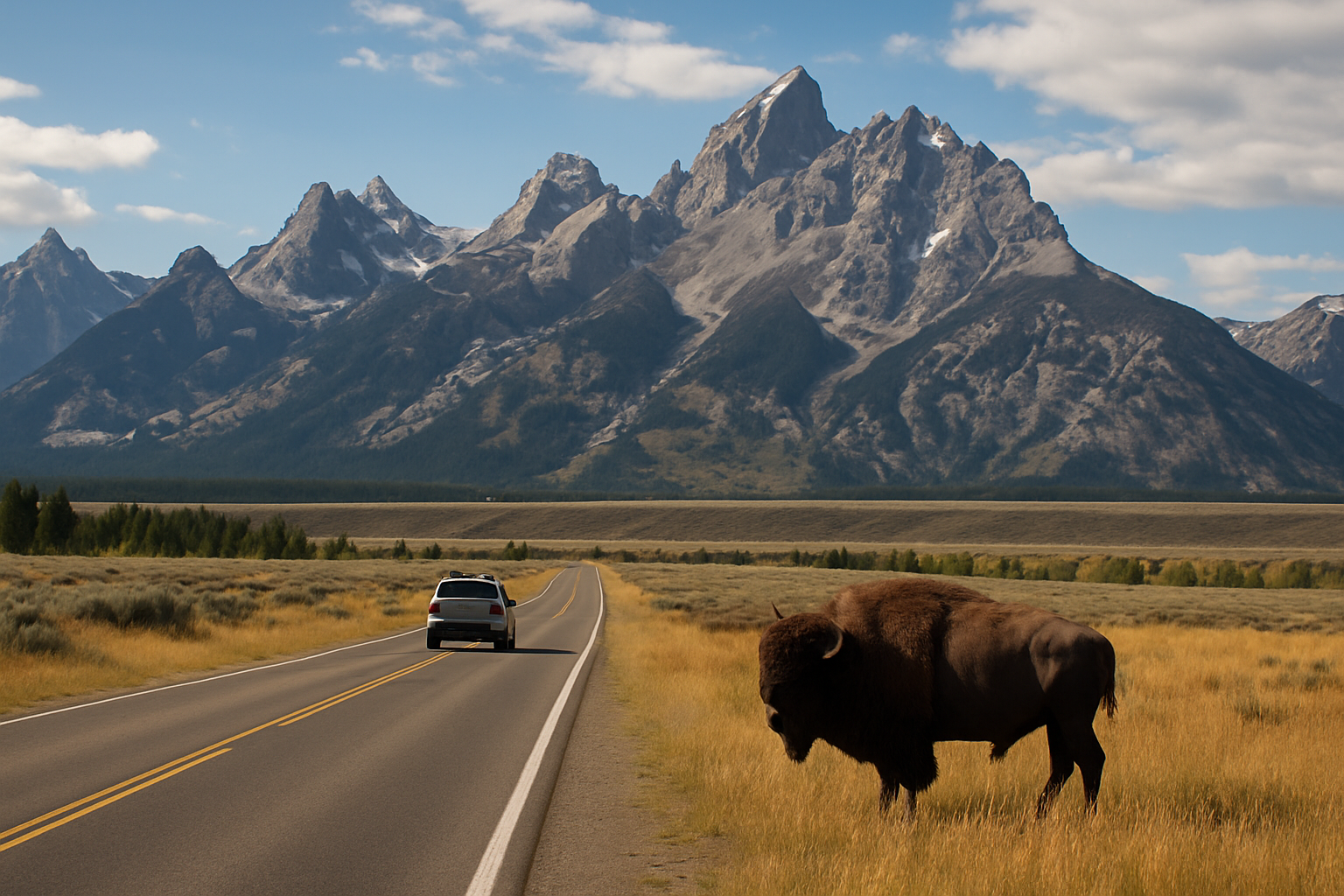
A car on a road through Grand Teton and Yellowstone

Renting a car is essentially required for Wyoming’s Yellowstone and Grand Teton. There’s no public transport within or between the parks, and the distances are immense — some trips cover 1,300 miles. Comparing suppliers on DiscoverCars helps you find the best rate for a road trip through two of America’s greatest parks.

Key Takeaways

  • A car is essential — there’s no public transport within or between the parks.
  • Yellowstone’s Grand Loop Road alone spans hundreds of miles of viewpoints.
  • Jackson Hole (JAC) is ~5 miles from Grand Teton; Salt Lake City is ~300 miles away.
  • A standard car handles all the paved park roads just fine.
  • The parks are too vast to explore on foot — driving is the only practical way.

Do You Need a Car for Yellowstone and Grand Teton?

Yes — it’s essentially necessary. There’s no public transportation in the greater Yellowstone area, and none within or between the two parks. The distances are simply too vast to explore any other way, so a rental car gives you the flexibility to drive the Grand Loop Road and stop at geysers, viewpoints, and wildlife along the way.

The only real alternative is booking guided tours, which travelers describe as very expensive and logistically limiting. For nearly everyone, renting a car is the only practical way to experience these parks.

DiscoverCars.com

Which Airport Should You Fly Into?

Jackson Hole Airport (JAC) is the most convenient, sitting about 5 miles from Grand Teton’s southern entrance at Moose and around 1.5 hours from Yellowstone’s south entrance. For potentially lower fares, some travelers fly into Salt Lake City (SLC) and drive nearly 300 miles (about 5 hours) to the parks.

  • Jackson Hole (JAC) — closest, ~5 miles from Grand Teton.
  • Salt Lake City (SLC) — cheaper fares, ~300 miles / 5 hours away.
  • Idaho Falls (IDA) — about 90 miles to the west.

How Much Driving Should You Expect?

A lot — and that’s the point. One traveler’s Salt Lake City loop through Yellowstone and Grand Teton covered about 1,300 miles. The parks are enormous: Yellowstone’s figure-eight Grand Loop Road alone connects the major geyser basins, canyons, and lakes over hundreds of miles.

Because you’ll drive so much, a comfortable, fuel-efficient rental pays off. Plan your daily distances and fuel stops, since services inside the parks are spread far apart.

Ready to compare Wyoming rental prices on DiscoverCars?

Check live Wyoming prices on DiscoverCars →

What Kind of Car Should You Rent?

You don’t need a special vehicle. Travelers report driving standard cars, minivans, and even subcompacts through both parks without any problems — the main roads are paved and well maintained. A standard car handles everything you’ll want to see.

An SUV adds comfort and cargo space for a longer trip or a family, but it isn’t necessary for the paved park roads. Choose based on your group size and budget rather than any off-road need.

Is DiscoverCars Good for a Yellowstone Trip?

Yes — DiscoverCars compares suppliers at Jackson Hole, Salt Lake City, and other regional airports in one search, showing the full price upfront. Since Salt Lake City often has cheaper fares and rentals despite the longer drive, comparison helps you weigh cost against convenience.

Most bookings include free cancellation too. Compare Wyoming rental prices on DiscoverCars to find the best rate for your parks road trip.

Bottom line: a rental car is essential for Yellowstone and Grand Teton — there’s no transit and the distances are enormous. Fly into Jackson Hole for convenience or Salt Lake City for value, rent a comfortable standard car, and compare on DiscoverCars for the best rate.

Should You Combine Yellowstone With Grand Teton?

Most travelers do — the two parks sit close together and share the same road network, making a combined trip natural. Grand Teton lies just south of Yellowstone, so a single rental easily covers both over several days.

Flying into Jackson Hole puts you right beside Grand Teton, then it’s a scenic drive north into Yellowstone. Compare Wyoming rentals on DiscoverCars to find the best base for a two-park trip.

Related DiscoverCars Guides

When Is the Best Time to Visit Yellowstone?

Late spring through early fall is prime time, when most roads and services are open. Summer is busiest and warmest, while September brings thinner crowds and active wildlife. Many park roads close in winter, when access is limited to guided oversnow vehicles.

Because the season is relatively short and demand is high, book your rental well ahead — regional fleets around Jackson Hole and Bozeman can sell out in peak summer.

One more practical tip for Wyoming: fuel up and stock supplies before entering the parks. Services inside Yellowstone and Grand Teton are spread far apart, and cell signal is patchy, so download maps offline in advance. With a full tank and a rough daily plan, you can focus on the geysers, wildlife, and mountain views rather than logistics.

Frequently Asked Questions

Do you need a car for Yellowstone and Grand Teton?

Yes — it’s essentially necessary. There’s no public transport within or between the parks, and the vast distances make self-driving the only practical way to explore. The alternative, guided tours, is expensive and limiting.

What airport is closest to Grand Teton and Yellowstone?

Jackson Hole Airport (JAC) is closest, about 5 miles from Grand Teton and 1.5 hours from Yellowstone’s south entrance. For cheaper fares, some fly into Salt Lake City and drive nearly 300 miles (about 5 hours).

How much driving is involved in a Yellowstone trip?

A lot — one Salt Lake City loop through both parks covered about 1,300 miles. Yellowstone’s Grand Loop Road alone spans hundreds of miles, so plan daily distances and fuel stops carefully.

Do you need an SUV for Yellowstone?

No. Travelers drive standard cars, minivans, and even subcompacts through both parks without problems, since the main roads are paved. An SUV adds comfort for larger groups but isn’t required.

Disclosure: This is an independent guide. This article contains affiliate links to DiscoverCars; if you book through them we may earn a small commission at no extra cost to you. It never changes what you pay or what we recommend.