Utah Mighty 5 Road Trip: Car Rental & Route Guide (2026)

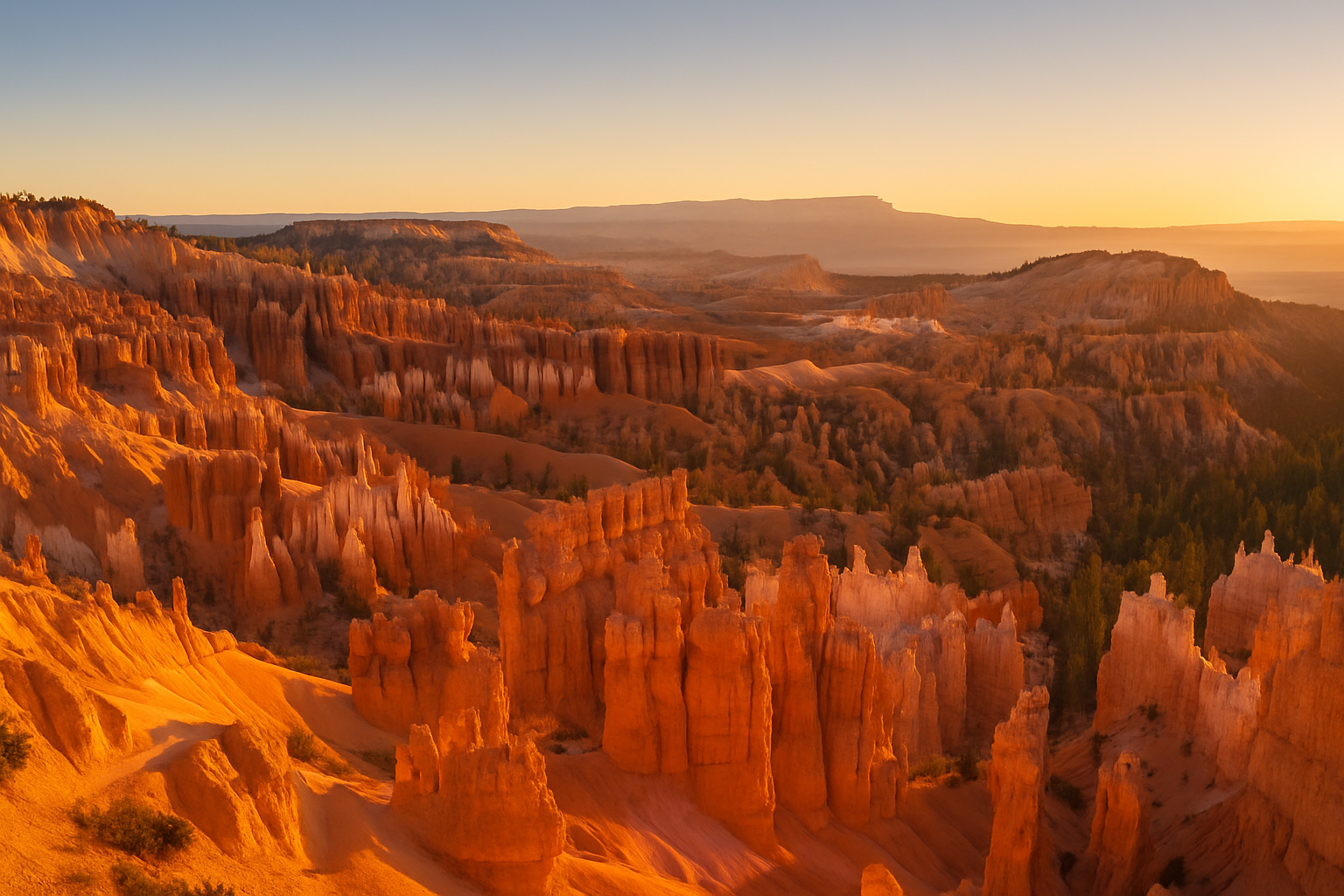
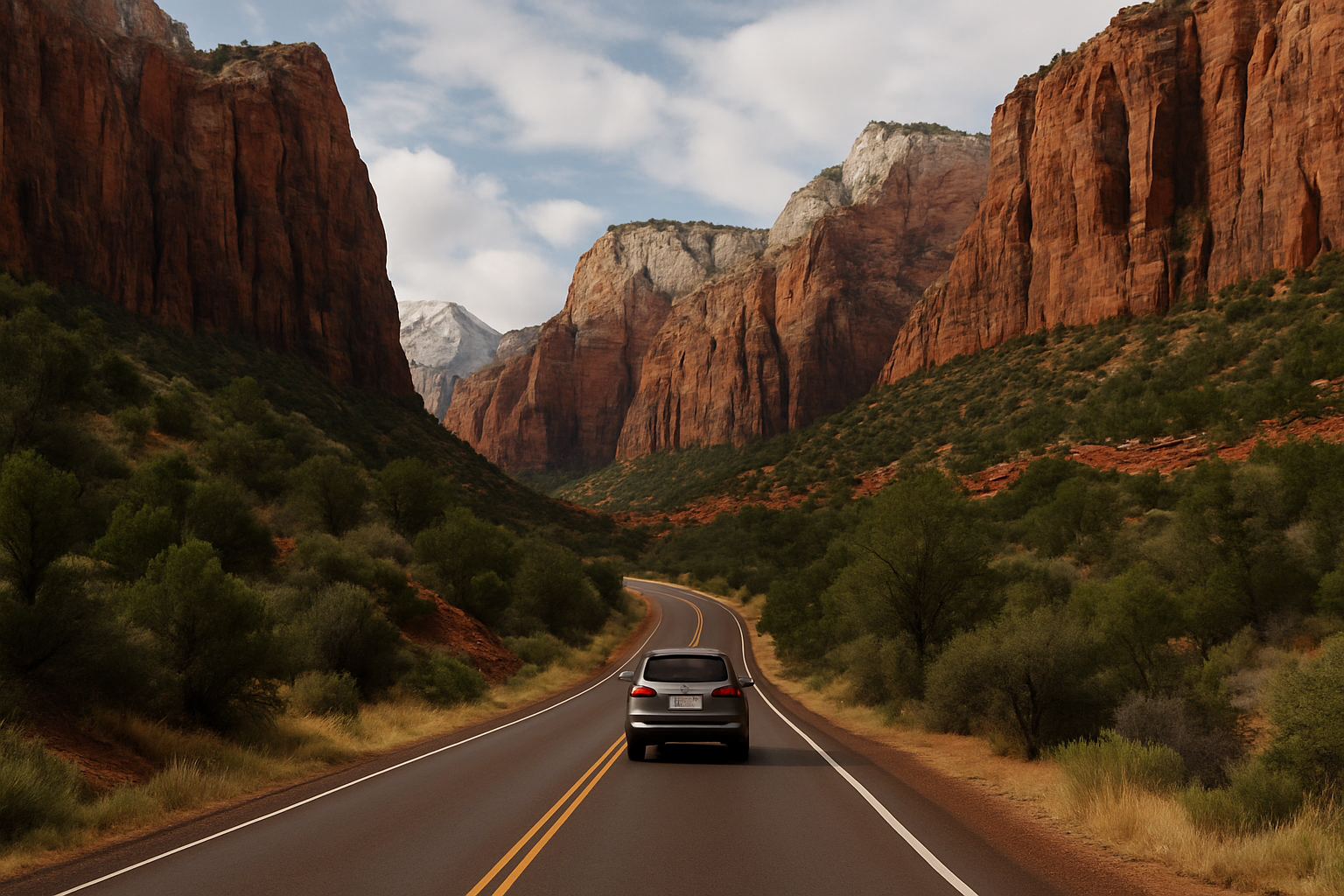
Utah national park red rock landscape at sunrise

Utah’s Mighty 5 — Zion, Bryce Canyon, Capitol Reef, Arches, and Canyonlands — is one of the world’s great road trips, and you need a rental car to do it: there is no public transport between the parks. Plan on about a week, fly into Las Vegas or Salt Lake City, and compare suppliers on DiscoverCars before you go.

Key Takeaways

  • The Mighty 5 loop is about 850 miles; allow 6–8 days.
  • Fly into Las Vegas (closest to Zion) or Salt Lake City (closest to Arches/Canyonlands).
  • A standard sedan handles every paved park road — no SUV needed unless it’s winter.
  • Zion to Bryce is about 85 miles; the parks pair naturally east to west.
  • Book early for spring and fall — the sweet spot for weather and crowds.
DiscoverCars.com

The Mighty 5 Route and Driving Distances

Most travelers drive the loop in one direction. Here are the core legs and drive times:

LegDistanceDrive time
Las Vegas → Zion~165 mi~2 hr 45 min
Zion → Bryce Canyon~85 mi~1 hr 45 min
Bryce → Capitol Reef~120 mi~2 hr 20 min
Capitol Reef → Arches (Moab)~145 mi~2 hr 30 min
Arches → Canyonlands~30 mi~40 min
Moab → Salt Lake City~235 mi~3 hr 45 min
Approximate distances along the standard Mighty 5 loop.

You can start from either gateway. From Las Vegas you hit Zion first; from Salt Lake City you reach Arches and Canyonlands first. A one-way rental (pick up in Vegas, drop in Salt Lake City) saves backtracking — just compare the one-way fee against the extra driving.

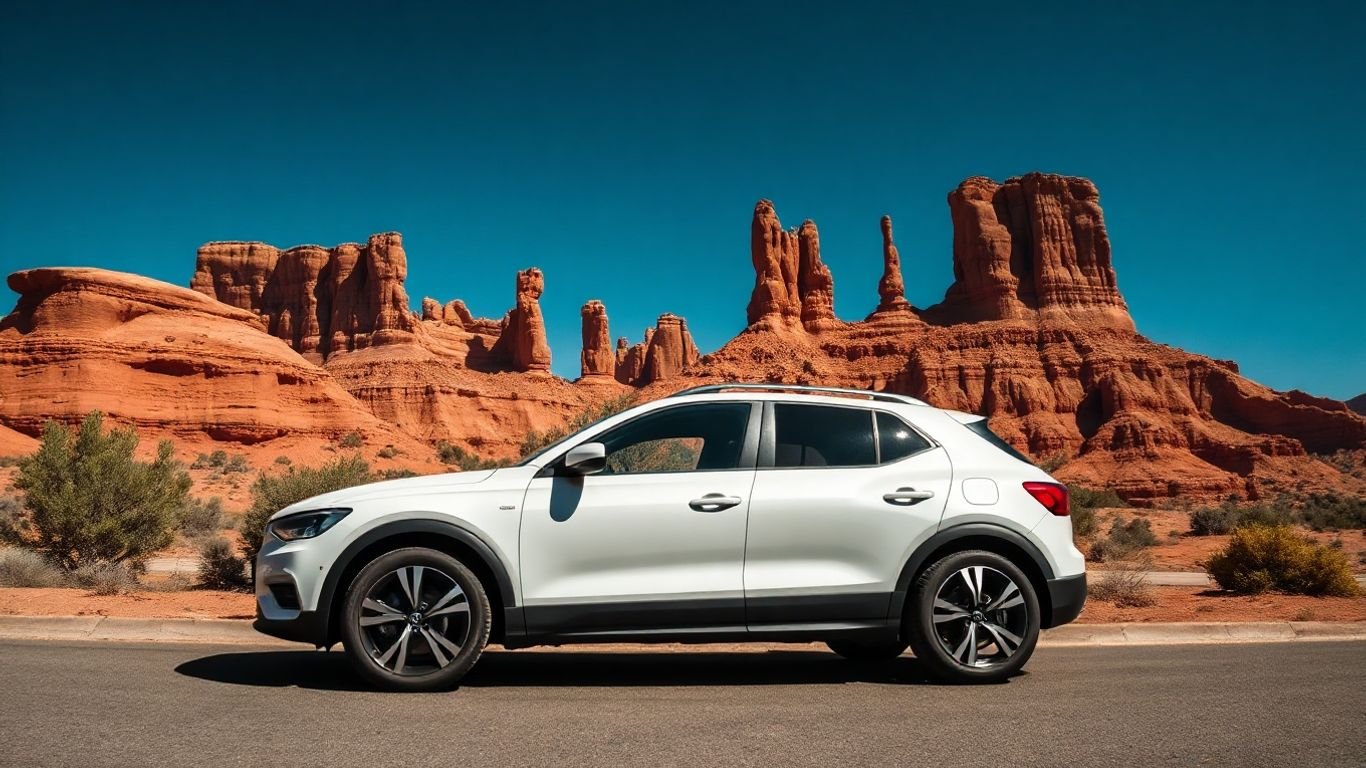
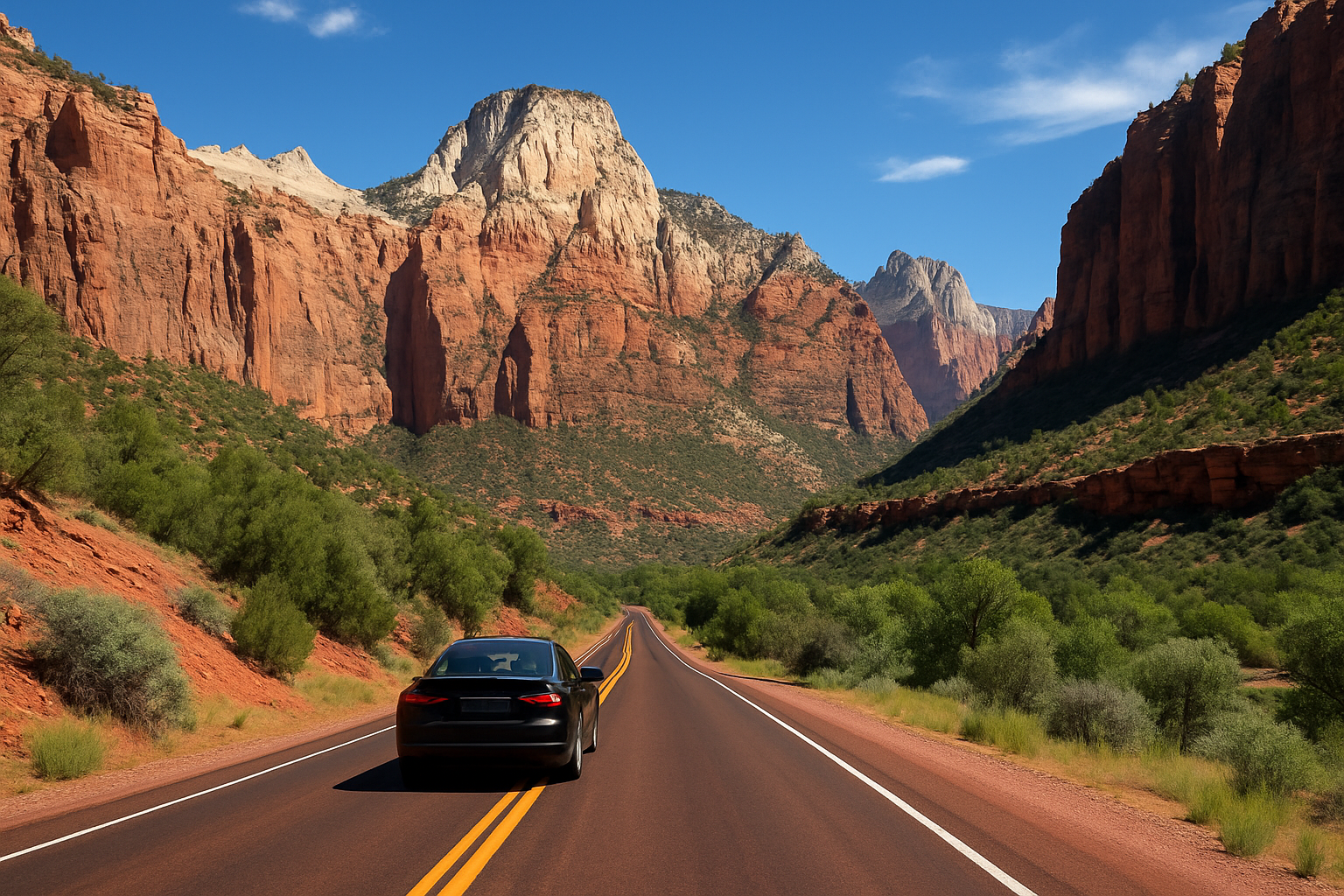
Driving through Utah red rock country

Which Car Do You Need for the Mighty 5?

A standard sedan is all you need — every main park road is paved and well maintained. An SUV only helps if you plan unpaved scenic routes (like parts of Canyonlands’ backcountry) or travel in winter, when high-elevation Bryce can see snow. For most spring-to-fall trips, a comfortable midsize sedan keeps costs and fuel down.

Where to Pick Up Your Rental Car

The two smart gateways:

  • Las Vegas (LAS) — closest to Zion and Bryce; the most flights and competitive rental rates.
  • Salt Lake City (SLC) — closest to Arches and Canyonlands near Moab; good if you run the loop in reverse.

Airport pickups are convenient but add fees; compare both airport and city-branch rates on DiscoverCars to find the best deal for your dates.

DiscoverCars.com

Tips for Driving the Mighty 5

  • Fuel up in towns — gas stations are sparse between parks; fill up in Springdale, Torrey, and Moab.
  • Buy the America the Beautiful pass — $80 covers entry to all five parks and pays for itself.
  • Start early — Zion and Arches fill their lots by mid-morning in peak season.
  • Watch the fuel range — long empty stretches around Capitol Reef.
  • Mind rental rules — most agencies ban unpaved roads, so check before any dirt route.

Ready to compare Utah rental prices?

Check live prices on DiscoverCars →

Frequently Asked Questions

How many days do you need for the Utah Mighty 5?

Plan on 6 to 8 days to see all five parks without rushing. The full loop is about 850 miles. You can do a fast version in 5 days, but a week lets you hike the highlights of Zion, Bryce, Capitol Reef, Arches, and Canyonlands.

Do you need an SUV for the Mighty 5?

No. Every main road in the five parks is paved, so a standard sedan handles the whole loop. An SUV only helps for unpaved backcountry routes or winter travel, when high-elevation Bryce can get snow. Most rental agencies also ban unpaved roads.

Where should you fly for the Mighty 5?

Las Vegas (LAS) is closest to Zion and Bryce and has the most flights and best rental rates. Salt Lake City (SLC) is closest to Arches and Canyonlands. Many travelers fly into one and out of the other with a one-way rental to avoid backtracking.

How far is Zion to Bryce Canyon?

About 85 miles, or roughly 1 hour 45 minutes, along UT-9 and US-89 through the Zion–Mt Carmel Tunnel. The two parks pair naturally and are the classic first two stops when driving the Mighty 5 from Las Vegas.

Disclosure: This article contains affiliate links. If you book through them, we may earn a commission at no extra cost to you.

For a full rental guide to every US national park, see our US national parks car rental hub.

DiscoverCars Salt Lake City: SLC Car Rental Guide (2026)

DiscoverCars Salt Lake City: SLC Car Rental Guide (2026)

Key Takeaways

Planning a successful road trip in Utah requires careful preparation and the right vehicle choice. These points highlight the essentials for a smooth experience:

  • Book your vehicle well in advance to secure availability.
  • Research seasonal road conditions, especially during winter months.
  • Inspect your rental car thoroughly for any pre-existing damage.
  • Utilize digital tools to compare prices and finalize your booking.
  • Always review your insurance coverage before finalizing the rental.
DiscoverCars.com

Why rent a car in Salt Lake City

Driving through Utah offers unparalleled access to some of the most dramatic landscapes in the United States. Having your own transportation allows for spontaneous stops at hidden overlooks and remote trailheads that public transit simply cannot reach.

Exploring national parks and outdoor recreation

Accessing areas like DiscoverCars Utah is best managed with a private vehicle. The ability to travel between national parks on your own schedule makes for a far more rewarding experience than waiting for scheduled shuttles or tour groups.

Necessity of flexible transportation in Utah

Public transit is largely nonexistent in the remote stretches of Utah, making a personal vehicle an absolute necessity. Whether you are heading to the mountains or the desert, having the right rental vehicle ensures you remain on schedule and comfortable throughout the journey.

Seasonal travel patterns and rental demand

Tourism peaks during summer and the height of ski season, which significantly impacts pricing. Travelers should look for options to rent a rental car during shoulder months to often find lower daily rates and thinner crowds at popular attractions.

Booking with DiscoverCars in Salt Lake City

Travelers arriving at Salt Lake City airport

Finding a reliable rental is simplified when you use a centralized comparison tool. DiscoverCars acts as a helpful platform where you can filter by price, vehicle size, and agency reputation, ensuring you make an informed decision for your upcoming Utah trip.

Navigating the DiscoverCars search interface

The interface is designed to provide clear, upfront information regarding costs and rental policies. Users can adjust parameters for pickup times and drop-off locations, helping to avoid surprises at the counter later on.

Comparing local rental agencies versus major brands

Deciding between a global franchise and a local agency involves weighing price against convenience and roadside support. DiscoverCars allows you to compare these side-by-side to see which fits your budget and service expectations for your trip.

Securing the best rates during peak seasons

Booking early remains the most effective strategy for managing costs when demand spikes. Using the DiscoverCars platform early allows you to lock in pricing before the limited supply of popular vehicle classes is fully depleted by vacationers.

Understanding the SLC airport pickup process

Locating the consolidated rental car center

The SLC airport rental center is housed within a modern facility that streamlines the collection process. Travelers will find most major brands situated in a central hub that is relatively easy to reach from the main terminals via designated walkways.

Managing shuttle versus walking distance pick-ups

While most large brands offer desk space within the consolidated center, some secondary agencies operate from sites requiring a shuttle ride. It is wise to verify whether your specific rental car provider requires a shuttle transfer before you land.

Handling arrivals outside of standard business hours

Night arrivals can occasionally pose a challenge if your provider has limited operating hours. Always confirm the after-hours drop-off or key-box procedures ahead of time to avoid being stranded without your vehicle upon arrival.

DiscoverCars.com

Navigating Salt Lake City and surrounding terrain
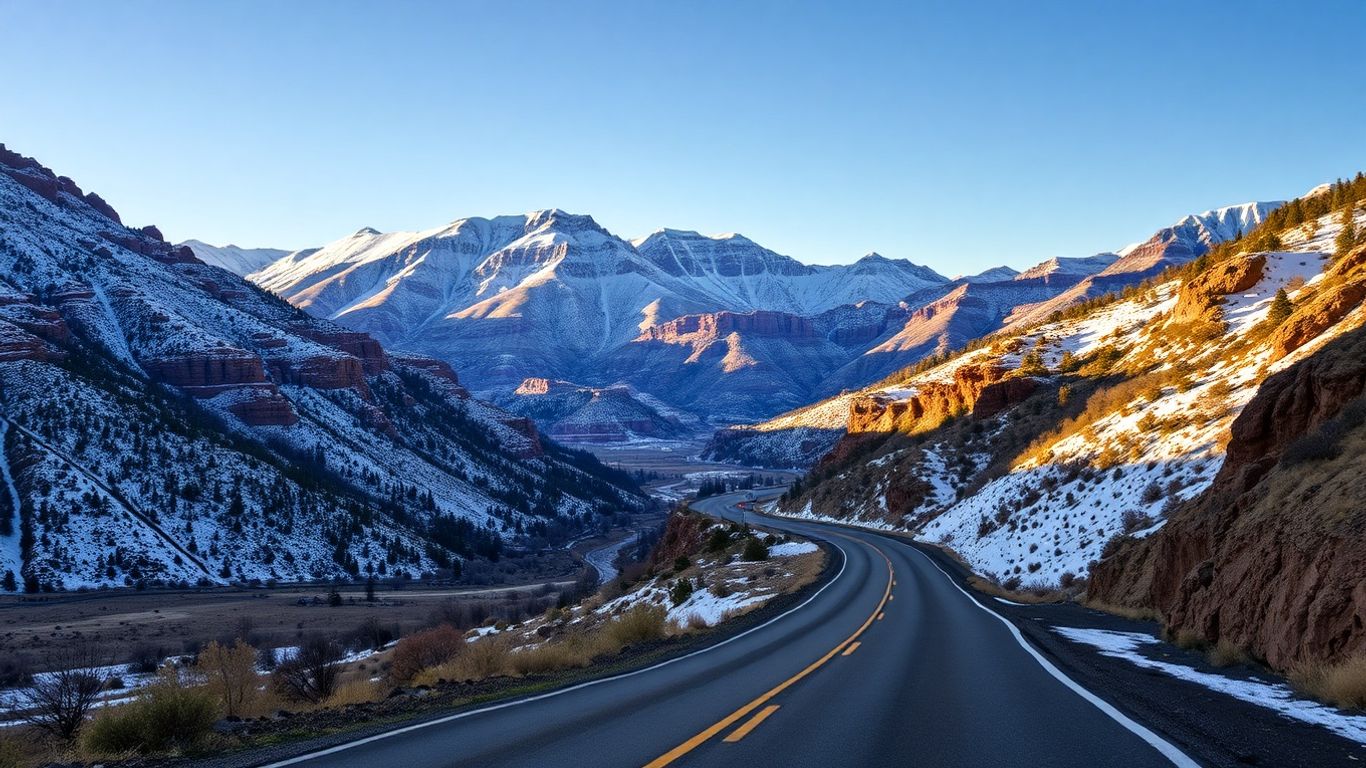
Snowy mountain road in Utah valley

Driving in Utah changes significantly as you leave the city and move into the higher elevations. Understanding the local geography is crucial for both safety and time management when traveling through the diverse terrain surrounding the capital.

Dealing with mountain road driving requirements

Mountain roads demand attentive driving, as grades can be steep and winding. Keeping a safe following distance and using low gears helps maintain vehicle control during steep descents, while staying aware of weather-sensitive road passages is recommended.

Understanding toll roads and high-occupancy lanes

While Utah has fewer toll requirements than other major metro hubs, certain express lanes and toll sections operate along major corridors. Being aware of these rules helps you decide if it is cost-effective to opt into electronic toll payment services offered by your rental agency.

Parking tips for downtown Salt Lake City

Downtown parking involves understanding various municipal lots and street limitations. To make your trip easier, consider this quick reference guide for common parking scenarios within the city limits.

Parking Option Typical Cost Best For
Street Meter Low Quick errands
Covered Garage Moderate Full day visits
Hotel Parking High Overnight stays

Navigating downtown is straightforward once you have identified your parking strategy, which allows you to spend more time exploring rather than searching for a space.

Essential tips for winter driving in Utah

Mandatory tire regulations and traction requirements

Winter conditions in the canyons can change in an instant, often triggering mandatory traction laws. It is essential to ensure your vehicle is equipped to handle snow and ice to keep yourself and other motorists safe.

Choosing a vehicle suitable for snowy conditions

Selecting an All-Wheel Drive vehicle is a common preference for winter exploration in the Wasatch range. These vehicles offer improved grip on slick roads, though drivers should maintain cautious speeds regardless of their car’s drivetrain.

Monitoring real-time road closures via UDOT

Staying informed is the best defense against being stuck behind traffic delays caused by avalanches or heavy snow. Checking official road updates will help you adjust your itinerary to avoid major delays during storm events.

Evaluating insurance and protection plans

Distinguishing between basic and full coverage options

Basic coverage typically handles the minimum legal financial requirements, while full coverage may protect against a much broader range of incidents. Always review the policy details to ensure you have the level of protection that matches your personal risk tolerance.

Verifying existing credit card rental protection

Many premium credit cards offer secondary or primary rental protection that can save you money at the counter. Contact your card provider before your trip to understand the exact scope of this coverage and how to invoke it if necessary.

Understanding deductible amounts and deposit holds

Security deposits are a standard industry practice, acting as a hold on your card for potential issues. The following list identifies key factors to consider before you hand over your payment method at the rental desk:

  • Confirm your deposit amount is released promptly after return.
  • Understand the financial penalty of a high insurance deductible.
  • Check whether the agency requires a credit card versus a debit card.
  • Clarify if any extra fees are charged for additional authorized drivers.

Managing your deposit correctly prevents unnecessary stress and ensures your budget remains intact throughout your vacation.

Avoiding common car rental pitfalls

Inspecting your rental vehicle for pre-existing damage

Before exiting the lot, you should walk around the vehicle and document any scratches or dents with photos or video. This simple habit protects you from being held liable for existing issues that were already present when you received the keys.

Calculating potential costs for fuel and tolls

Fuel and toll charges can add substantial amounts to the final bill if you fail to estimate them properly. Budgeting for these additional expenses helps you maintain control over the total cost of your travel.

Reviewing mileage policies for long-distance trips

If you plan on driving extensive distances between parks, check for mileage caps in your rental agreement. Staying within these limits avoids steep per-mile surcharges, ensuring your trip budget remains predictable from start to finish.

Conclusion

Securing the right rental transportation for your stay in Salt Lake City transforms your journey from a simple visit into an expansive adventure through Utah’s stunning wilderness. By following these practical steps—from comparing agencies online to checking your insurance status and inspecting your vehicle—you ensure a trip that is defined by freedom rather than logistics. Planning ahead really is the key to fully enjoying every mile of your desert or mountain excursion.

Ready to compare Salt Lake City rental prices?

Check live prices on DiscoverCars →

Frequently Asked Questions

Is it possible to find cheap car rentals in Salt Lake City year-round?

Yes, prices shift according to peak travel seasons, with winter and summer generally reflecting the highest demand. You can often find significant savings by booking during shoulder months or searching across multiple providers to secure a cheap car rentals deal.

Do I need a specific type of car to visit Zion or other national parks?

A standard sedan is perfectly capable of handling the main paved roads leading into Utah’s national parks. An SUV is only necessary if your personal itinerary involves rugged, unpaved backcountry trails.

What documentation do I need to pick up a rental car?

You must provide a valid driver’s license in your name, a credit card for the security hold, and proof of your reservation. Depending on your status as an international traveler, you might also need to present your passport.

Can I return my rental car to a different city?

Many rental agencies permit one-way rentals, though this often incurs an additional drop-off fee. It is best to arrange this at the time of booking to ensure the agency has authorized the change in location.

Are there age restrictions for renting a car in Salt Lake City?

Most agencies require renters to be at least 21 years old, but those under 25 often face additional daily surcharges. Always check the specific age policy of the rental company you select through your booking platform.

Should I opt for the rental agency’s insurance coverage?

Deciding whether to take the agency’s insurance depends entirely on your existing personal insurance or the coverage provided by your credit card. If you are uncertain about the extent of your current protection, purchasing the agency policy provides peace of mind against unforeseen costs.

How long should I allow for returning a rental vehicle before my flight?

It is recommended to arrive at the rental car return facility at least two hours before your flight departure. This allows enough time to process the vehicle check-in, handle any paperwork, and take the walk or shuttle back to your terminal.

Disclosure: This article contains affiliate links. If you book through them, we may earn a commission at no extra cost to you. This helps support our free guides.


DiscoverCars Bryce Canyon: Bryce Canyon Car Rental Guide

Bryce Canyon hoodoos at sunrise

Renting a car for Bryce Canyon isn’t optional — it’s the only practical way to reach this remote Utah park and its otherworldly hoodoos. There’s no public transit to Bryce, so a rental lets you pair it with nearby Zion on your own schedule. Comparing suppliers on DiscoverCars helps you find the cheapest rate, whether you start in Las Vegas or Salt Lake City.

Last updated: July 2026.

Key Takeaways

  • A rental car is essential — there’s no public transit to Bryce Canyon.
  • Las Vegas (~4h) and Salt Lake City (~4h) are the main rental hubs.
  • Bryce pairs perfectly with Zion, just 84 miles (about 1h 45m) away.
  • A free in-park shuttle runs in peak season, but you need a car to get there.
  • A standard car handles every paved park road — no SUV needed in summer.
DiscoverCars.com

Do You Need a Car to Visit Bryce Canyon?

Yes — getting to Bryce requires driving. There’s no train or through bus service to this remote corner of southern Utah. A free park shuttle runs the main amphitheater viewpoints in peak season, but you still need a car to reach the park and to explore the wider region.

A rental also lets you combine Bryce with Zion and the rest of Utah’s ‘Mighty 5’ — see our Utah national parks rental guide for the full loop.

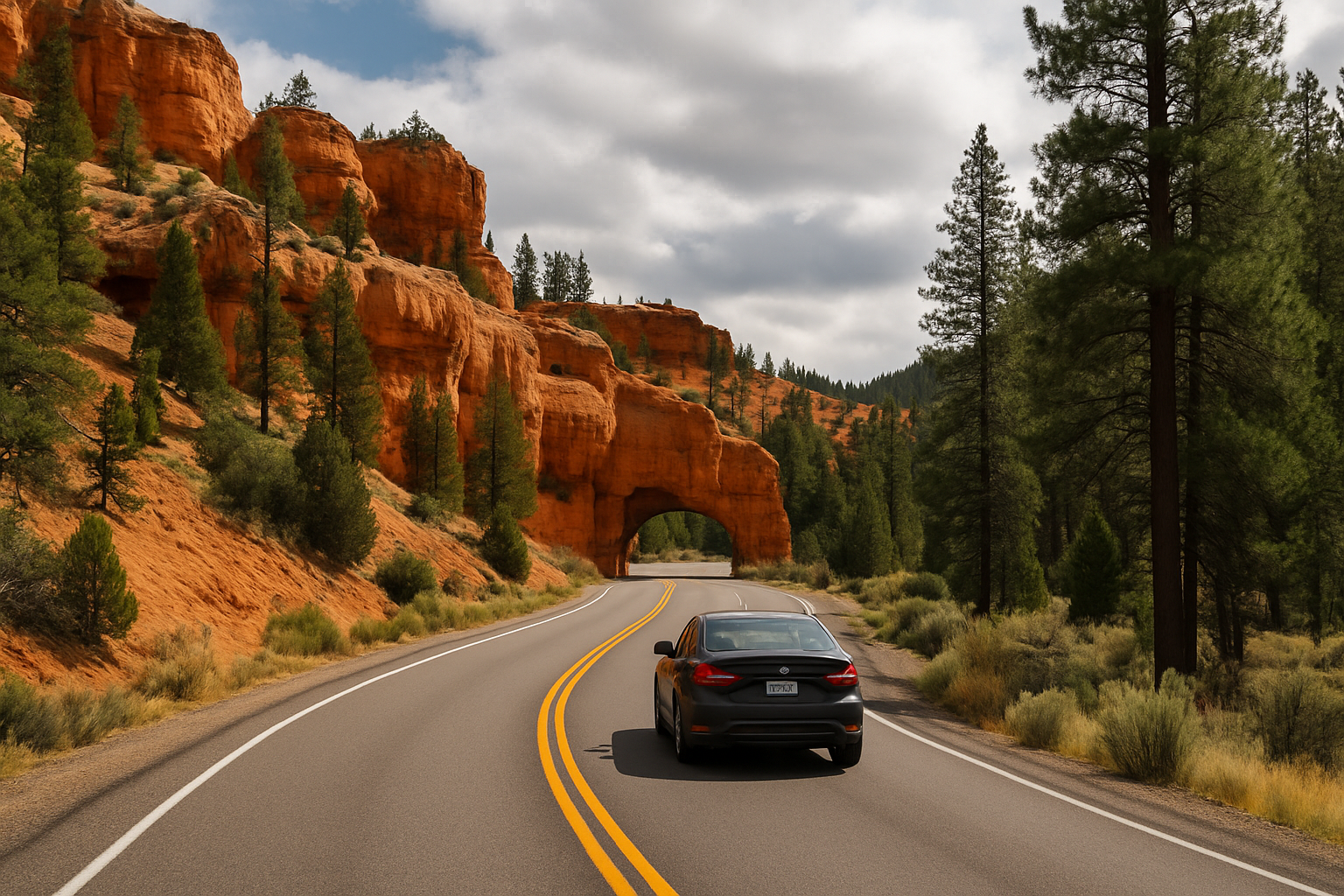
Scenic drive near Bryce Canyon

Where Should You Rent a Car for Bryce Canyon?

Two hubs dominate, with a trade-off between flight cost and drive time:

  • Las Vegas (LAS) — cheapest flights and cars; about 4 hours to Bryce — see our Las Vegas rental guide.
  • Salt Lake City (SLC) — northern gateway; about 4 hours south to Bryce.
  • St. George (SGU) — closer to Zion; a good base if combining both parks.
DiscoverCars.com

How Far Is Bryce Canyon From Major Points?

Bryce pairs naturally with the other Southwest parks. Here are the key drives:

FromDistanceDrive time
Las Vegas~260 miles~4h
Salt Lake City~270 miles~4h
Zion National Park~84 miles~1h 45m
Grand Canyon North Rim~160 miles~3h
Capitol Reef~120 miles~2h 20m
Approximate driving distances; add time for scenic stops and park entry lines.

The Zion-to-Bryce leg on Scenic Byway 12 is one of the most beautiful drives in the Southwest, which is why the two parks are almost always visited together.

What Kind of Car Should You Rent for Bryce?

A standard sedan is all you need. Every road to and around Bryce is paved and well-maintained, so an economy or midsize car handles the trip and keeps costs down. Bryce sits at high elevation (8,000+ feet), so in winter check conditions — but for a summer trip, a regular car is perfect.

When Is the Best Time to Visit Bryce Canyon?

Late spring through early fall offers the best weather and full access, with the shuttle running and all viewpoints open. Bryce’s high elevation keeps summer days cooler than nearby Zion. Winter is quiet and stunning — snow on the red hoodoos is spectacular — but some roads and services scale back.

How Can You Save on a Bryce Canyon Rental?

A few habits keep the trip affordable:

  • Compare suppliers — rates vary widely at Las Vegas and Salt Lake City.
  • Book early — spring and fall are peak season for the parks.
  • Confirm unlimited mileage — a multi-park Utah loop covers real distance.
  • Mind the young driver fee — under-25 renters pay extra; see our age requirements guide.

Ready to compare Bryce Canyon rental prices?

Check live prices on DiscoverCars →

Bottom line: a rental car is the only way to reach Bryce Canyon, and it lets you pair it with Zion on one of the Southwest’s best drives. Compare suppliers on DiscoverCars to lock in the cheapest rate for the trip.

What Can You Do Around Bryce Canyon?

A rental car opens up more than just Bryce itself. The wider region is packed with scenery that rewards a flexible schedule:

  • Scenic Byway 12 — one of America’s most beautiful drives, linking Bryce toward Capitol Reef.
  • Red Canyon — just west of Bryce, with striking rock arches right off the highway.
  • Kodachrome Basin State Park — colorful spires a short drive away.
  • Grand Staircase-Escalante — vast backcountry for the adventurous.

These stops are only realistic with your own vehicle, since none are served by transit. Having a rental turns a single-park visit into a full Southern Utah road trip, which is exactly why comparing rates on DiscoverCars before you go pays off.

Combining parks? This park pairs perfectly on the Utah Mighty 5 road trip and Southwest national parks loop. For a rental guide to every US national park, see our national parks car rental hub.

Frequently Asked Questions About Bryce Canyon Car Rental

Do you need a car to visit Bryce Canyon?

Yes. There’s no public transit to Bryce, so a rental car is essential to reach the park. A free shuttle runs the main viewpoints in peak season, but you still need a car to get to the park and to combine it with nearby Zion.

How far is Bryce Canyon from Zion?

About 84 miles, or roughly 1 hour 45 minutes, on the scenic UT-12 and UT-89 route. It’s one of the most beautiful drives in the Southwest, which is why the two parks are almost always visited on the same trip.

Where is the closest airport to Bryce Canyon?

Las Vegas (LAS) and Salt Lake City (SLC) are the main hubs, each about 4 hours away, with the cheapest flights and rental cars. St. George is closer to Zion and works well if you’re combining both parks.

Do you need an SUV for Bryce Canyon?

No. Every road to and around Bryce is paved, so a standard sedan is fine in summer. Bryce sits above 8,000 feet, so check winter conditions, but for a warm-season trip a regular car handles it well.

Related DiscoverCars Guides

Disclosure: This is an independent guide. This article contains affiliate links to DiscoverCars; if you book through them we may earn a small commission at no extra cost to you. It never changes what you pay or what we recommend.

DiscoverCars Zion: Zion National Park Car Rental Guide

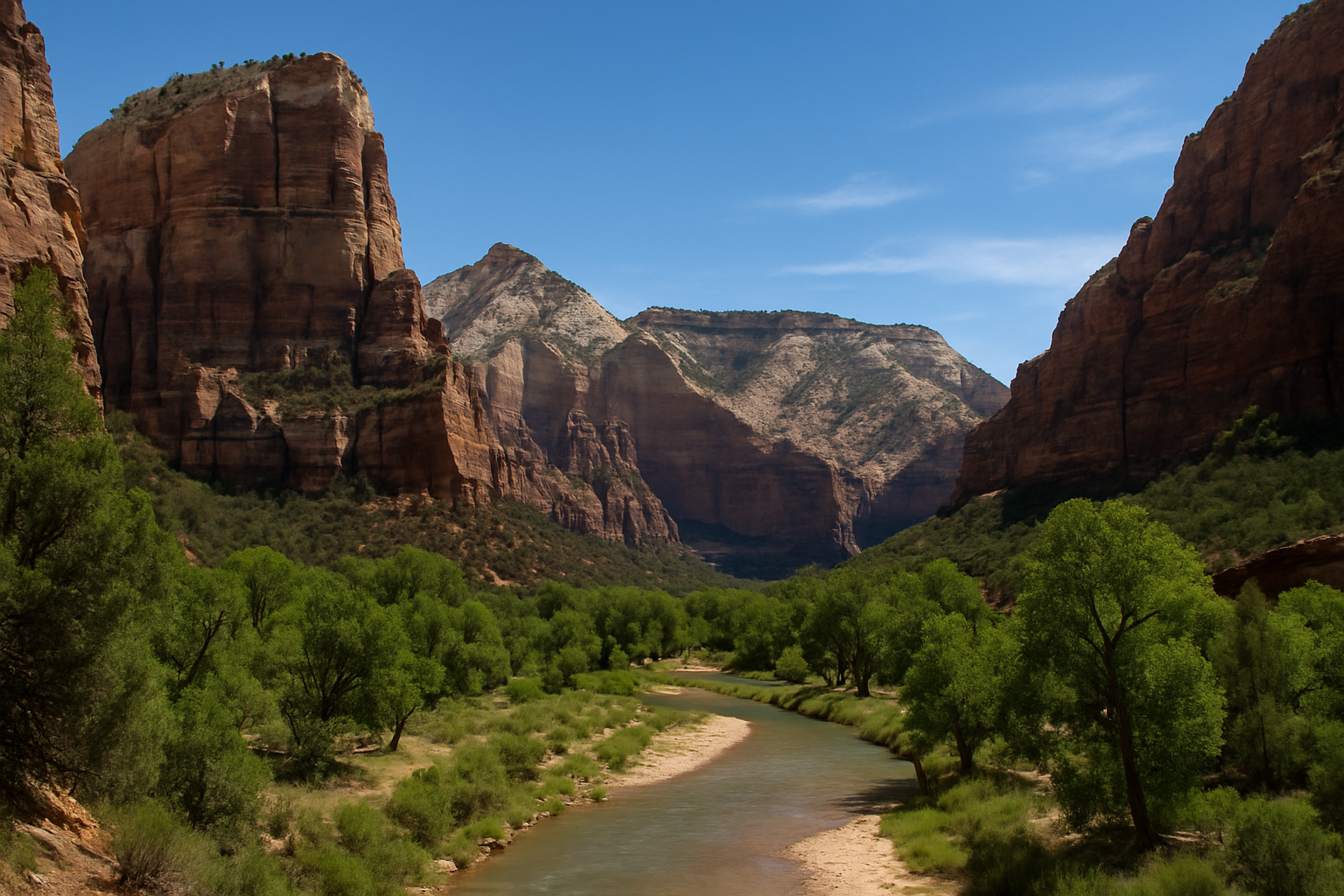
Zion National Park canyon and cliffs

Renting a car for Zion National Park isn’t optional — it’s the only practical way to get there. There’s no public transit to the park, so a rental gives you the freedom to reach Zion and pair it with Bryce Canyon or the Grand Canyon on your own schedule. Comparing suppliers on DiscoverCars helps you find the cheapest rate, whether you start in Las Vegas or nearby St. George.

Last updated: July 2026.

Key Takeaways

  • A rental car is essential to reach Zion — there’s no public transit to the park.
  • Las Vegas (~2h 45m) and St. George (~45m) are the main rental hubs.
  • Inside Zion, a free shuttle runs the canyon; private cars are restricted in peak season.
  • A standard car is fine — every road you need is paved.
  • Compare suppliers on DiscoverCars to find the cheapest rate for the drive.
DiscoverCars.com

Do You Need a Car to Visit Zion?

Yes — getting to Zion requires driving. There’s no train or through bus service, and while the town of Springdale sits at the park’s doorstep, you still need a vehicle to reach it. A rental also lets you explore beyond Zion, since the best Southwest trips pair it with nearby parks.

One quirk: inside Zion Canyon, private cars are restricted during the busy season (roughly spring through fall). A free park shuttle runs the scenic drive instead, so you park your rental and ride the shuttle in — but you still need the car to get to the park and explore the rest of the region.

Where Should You Rent a Car for Zion?

Two hubs dominate, with a trade-off between flight cost and drive time:

  • Las Vegas (LAS) — cheapest flights and rental cars; about 2h 45m (160 miles) to Zion.
  • St. George (SGU) — closest airport at just ~45 minutes, but smaller with fewer flights.
  • Salt Lake City (SLC) — northern gateway, about 4h 30m south to Zion.

Las Vegas is the most popular launch point for its low rates — see our DiscoverCars Las Vegas guide. To combine Zion with Bryce and the rest of the Mighty 5, see our Utah national parks rental guide.

DiscoverCars.com
The scenic drive into Zion National Park

How Far Is Zion From Major Cities and Parks?

Zion pairs naturally with the other Southwest parks. Here are the key drives to help you plan:

FromDistanceDrive time
Las Vegas~160 miles~2h 45m
St. George~45 miles~45m
Salt Lake City~308 miles~4h 30m
Bryce Canyon~84 miles~1h 45m
Grand Canyon North Rim~120 miles~2h 30m
Approximate distances; add time for scenic stops and park entry lines.

Zion to Bryce is one of the most scenic drives in the Southwest, and the North Rim of the Grand Canyon is a manageable add-on from the same base.

What Kind of Car Should You Rent for Zion?

A standard sedan is all you need. Every road to and around Zion is paved, including the famous Zion–Mt Carmel Highway, so an economy or midsize car handles the trip and keeps costs down.

Note a 2026 rule: since June 7, 2026, oversized vehicles can no longer use the Zion–Mt Carmel Tunnel, as oversized permits were discontinued. Standard cars and most SUVs are well within the size limits, so this only affects large RVs and trucks.

When Is the Best Time to Visit Zion?

Spring and fall offer the best balance — mild temperatures, flowing waterfalls in spring, and fewer crowds than summer. Summer is hot and busy, with the shuttle at full service and the most restrictions on private cars in the canyon.

Winter is the quietest season: you can often drive your own car up the canyon when the shuttle pauses, though some trails may be icy. If you want the canyon to yourself, winter has a special appeal.

How Can You Save on a Zion Rental?

A few habits keep your Zion road trip affordable:

  • Compare suppliers — rates vary widely between companies at Las Vegas.
  • Book early — prices climb in spring and fall peak season.
  • Fly into Las Vegas — usually cheaper than St. George for flights and cars combined.
  • Check mileage caps — a multi-park loop covers real distance; confirm unlimited miles.
  • Mind the young driver fee — under-25 renters pay extra; see our age guide.

For the under-25 surcharge and how to avoid it, see our rental car age requirements guide.

Ready to compare Zion rental prices?

Check live prices on DiscoverCars →

Combining parks? This park pairs perfectly on the Southwest national parks loop (Grand Canyon, Zion & Bryce) and Utah Mighty 5 road trip. For a rental guide to every US national park, see our national parks car rental hub.

Frequently Asked Questions

Do you need a car to visit Zion National Park?

Yes. There’s no public transit to Zion, so a rental car is essential to reach the park. Note that inside Zion Canyon, private cars are restricted in peak season and a free park shuttle runs the scenic drive instead — but you still need a car to get to the park and explore the region.

How far is Las Vegas to Zion?

Las Vegas to Zion is about 160 miles, roughly a 2 hour 45 minute drive. Las Vegas is the most popular starting point thanks to cheap flights and low rental rates. St. George is closer at about 45 minutes but has a smaller airport.

Can you drive your own car in Zion?

In peak season (spring through fall), private cars are restricted on the Zion Canyon Scenic Drive, and you use the free park shuttle instead. In winter, when the shuttle pauses, you can usually drive your own car up the canyon. You always need a car to reach the park itself.

Do you need an SUV for Zion?

No. Every road to and around Zion is paved, so a standard sedan is fine. Since June 2026, oversized vehicles can’t use the Zion–Mt Carmel Tunnel, but standard cars and most SUVs are well within the limits.

Related DiscoverCars Guides

Disclosure: This is an independent guide. This article contains affiliate links to DiscoverCars; if you book through them we may earn a small commission at no extra cost to you. It never changes what you pay or what we recommend.

DiscoverCars Utah: Utah Car Rental Guide (Zion & Bryce)

A car driving a scenic red-rock highway toward Zion National Park in Utah

Renting a car for Utah’s national parks isn’t optional — it’s essential. There’s no public transit linking Zion, Bryce Canyon, and the rest of the ‘Mighty 5’, so a rental is the only practical way to see them. Comparing suppliers on DiscoverCars helps you find the best rate for a road trip that’s remote, scenic, and utterly worth it.

Last updated: July 2026.

Key Takeaways

  • A rental car is essential — there’s no public transport between Utah’s parks.
  • Zion to Bryce Canyon is just 84 miles (about 1h 45m) via scenic UT-89 and Byway 12.
  • Las Vegas, Salt Lake City, and St. George are the main rental starting points.
  • A standard sedan handles all paved park roads — you don’t need an SUV.
  • In-park shuttles exist, but only get you around inside the parks, not between them.

Why Do You Need a Car for Utah’s National Parks?

Simply put, there’s no way to do this trip by public transport. The parks are remote, and while Zion and Bryce each have excellent in-park shuttle systems, those only move you around inside a park — not between them or to them. Getting to and between the Mighty 5 requires driving yourself.

That makes a rental car the single most important part of planning a Utah parks trip. Once you have one, the whole region opens up on your own schedule.

DiscoverCars.com

Where Should You Rent Your Car?

Three hubs dominate, each with trade-offs. Las Vegas is the most popular for its cheap flights and low rental rates, though it’s about 3 hours from Zion. Salt Lake City is a common northern gateway, roughly 308 miles (4.5 hours) south to Zion on I-15. St. George (SGU) is the closest and most convenient airport to Zion if the fares work for you.

  • Las Vegas (LAS) — cheapest flights and cars; ~3 hours to Zion.
  • Salt Lake City (SLC) — northern gateway; ~308 miles to Zion.
  • St. George (SGU) — closest to Zion, but smaller airport.

How Far Is Zion to Bryce Canyon?

The core leg of the trip is short and spectacular: Zion to Bryce Canyon is about 84 miles, or roughly 1 hour 45 minutes, following UT-89 and Scenic Byway 12 — one of the most famous drives in the Southwest. You pass through the Zion–Mt Carmel Tunnel on the way.

Note a 2026 rule: since June 7, 2026, oversized vehicles can no longer use the Zion–Mt Carmel Tunnel, as oversized permits were discontinued. Standard cars and most SUVs are well within the limits.

Utah National Parks Distance & Drive-Time Chart

Planning the route is easier with real distances. Here are the key drives for a Utah ‘Mighty 5’ road trip, from the main rental hubs and between the parks themselves:

RouteDistanceDrive time
Las Vegas → Zion~160 miles~2h 45m
Salt Lake City → Zion~308 miles~4h 30m
St. George → Zion~45 miles~45m
Zion → Bryce Canyon~84 miles~1h 45m
Bryce Canyon → Capitol Reef~120 miles~2h 20m
Capitol Reef → Canyonlands~145 miles~2h 30m
Canyonlands → Arches~30 miles~40m
Las Vegas → Grand Canyon (South Rim)~275 miles~4h 30m
Approximate driving distances; add time for scenic stops, park entrances, and seasonal traffic.

A full Mighty 5 loop from Las Vegas or Salt Lake City covers roughly 800–1,000 miles, so factor the mileage into your rental — and check for any mileage caps when you compare suppliers on DiscoverCars.

Ready to compare Utah rental prices on DiscoverCars?

Check live Utah prices on DiscoverCars →

What Kind of Car Should You Rent?

Good news — you don’t need anything fancy. All the roads in Zion and Bryce are paved, and a standard sedan handles the main park routes perfectly. Renting an SUV mainly adds cost unless you specifically plan to explore backcountry dirt roads.

One important caveat: most rental agencies prohibit taking their cars on unpaved roads, which voids the insurance. So for the paved park highways, save money and skip the SUV upgrade — a comfortable sedan is all you need.

Is DiscoverCars Good for a Utah Parks Trip?

Yes — DiscoverCars compares dozens of suppliers at Las Vegas, Salt Lake City, and St. George in one search, showing the full price before you book. Because Las Vegas has some of the cheapest rentals in the region, comparison often reveals real savings for a multi-day parks road trip.

Most bookings include free cancellation, so you can lock a rate early and rebook if it drops. Compare Utah rental prices on DiscoverCars to start your Mighty 5 trip with a fair rate.

Bottom line: a rental car is non-negotiable for Utah’s national parks — the region is remote with no transit between the parks. Rent a simple sedan, start from Las Vegas, Salt Lake City, or St. George, and enjoy the 84-mile Zion-to-Bryce drive. Compare on DiscoverCars for the best rate.

Should You Do a One-Way Utah Parks Road Trip?

Many travelers fly into one city and out of another to avoid backtracking — for example, into Las Vegas and out of Salt Lake City after looping the Mighty 5. One-way rentals make this possible, though drop fees vary by supplier, so it’s worth comparing against a round trip.

Because the parks are spread across southern Utah, a one-way itinerary can save hours of driving. Compare one-way and round-trip Utah rentals on DiscoverCars to see which structure is cheaper for your dates.

Related DiscoverCars Guides

When Is the Best Time to Visit Utah’s Parks?

Spring and fall offer the best balance of mild weather and thinner crowds. Summer is peak season — hot in Zion’s lower elevations and busy everywhere — while winter brings snow to higher Bryce Canyon but quieter trails. Rental rates and park crowds both rise in summer.

Whenever you go, book your car early for the best selection, since regional fleets can tighten during peak months and holiday weekends.

Frequently Asked Questions

Do you need a car to visit Zion and Bryce Canyon?

Yes — there’s no public transport between Utah’s national parks, so a rental car is essential. In-park shuttles only move you around inside each park, not between them or to them from an airport.

How far is it from Zion to Bryce Canyon?

About 84 miles, or roughly 1 hour 45 minutes, along UT-89 and Scenic Byway 12 — one of the Southwest’s most famous drives. You pass through the Zion–Mt Carmel Tunnel on the way.

Do you need an SUV for Utah’s national parks?

No. All the roads in Zion and Bryce are paved, and a standard sedan handles them fine. Most rental agencies also ban driving on unpaved roads, so an SUV mainly adds cost unless you plan backcountry trips.

Where is the cheapest place to rent a car for Utah parks?

Las Vegas typically has the cheapest flights and rental cars, though it’s about 3 hours from Zion. Compare Las Vegas, Salt Lake City, and St. George on DiscoverCars to find the best all-in rate.

Disclosure: This is an independent guide. This article contains affiliate links to DiscoverCars; if you book through them we may earn a small commission at no extra cost to you. It never changes what you pay or what we recommend.